 EN

Diatomaceous Earth for Industrial Liquid Filtration, Water Treatment and Mineral Filler Applications
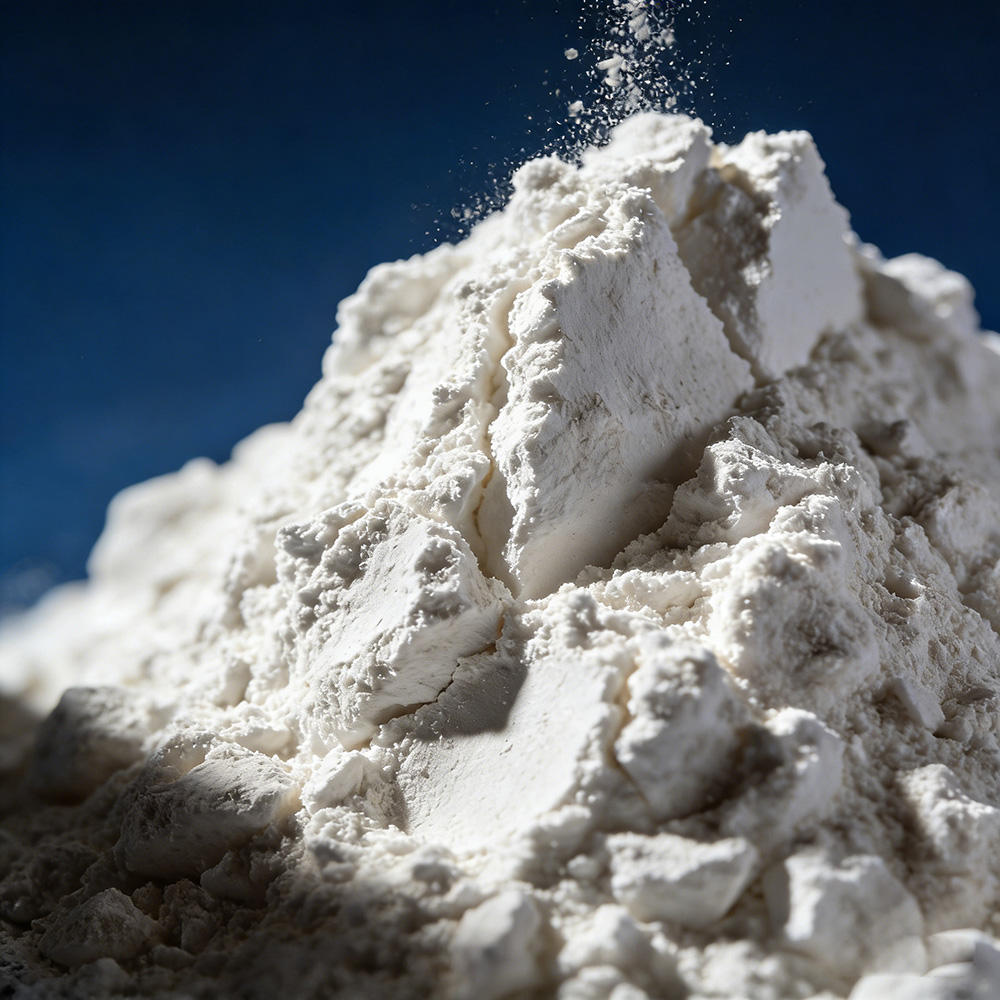
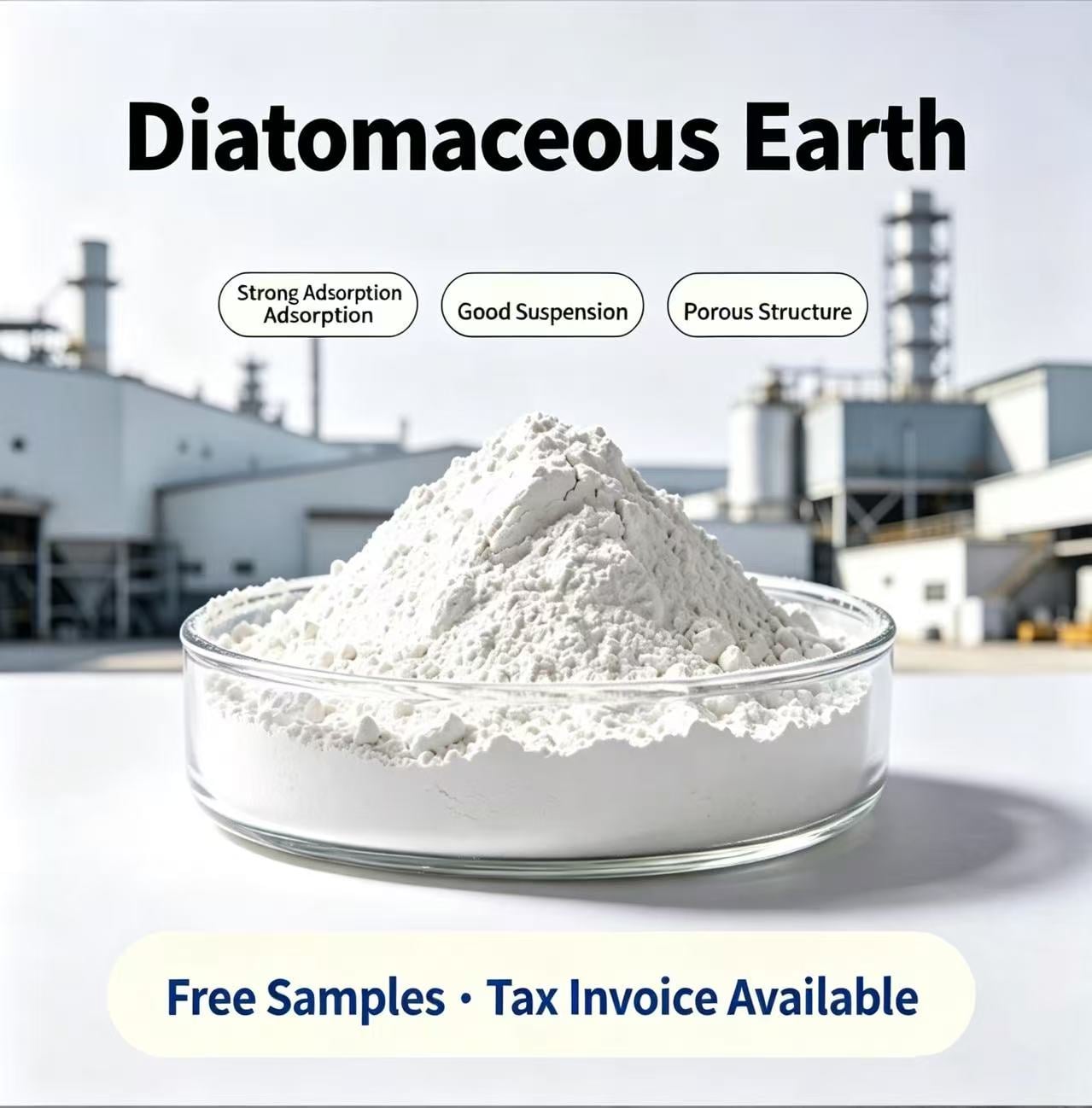
Diatomaceous Earth is a natural non-metallic mineral material mainly composed of silica, featuring a unique porous structure, high specific surface area and excellent filtration and absorption properties. Processed through crushing, grinding, drying and classification, it is available in natural and calcined grades with various specifications. Widely used in industrial filtration, water treatment, food and beverage filtration, chemicals, paints, rubber, plastics and environmental applications. Customized particle sizes and packaging are available.
- Overview
- Recommended Products
Product Introduction
Diatomaceous Earth is a naturally occurring non-metallic mineral material formed from the fossilized remains of microscopic aquatic organisms known as diatoms. Over millions of years, these silica-rich remains accumulated and formed mineral deposits with a distinctive porous structure. Due to its natural porosity, relatively low bulk density and high surface area, Diatomaceous Earth has become an important industrial mineral used in filtration, absorption, filling and various manufacturing processes.
Our Diatomaceous Earth is processed through raw material selection, crushing, drying, grinding and particle classification. Different grades and specifications can be supplied according to the intended application and customer requirements. Depending on product availability, common types include Natural Diatomaceous Earth, Calcined Diatomaceous Earth and Flux Calcined Diatomaceous Earth. Each type has different physical characteristics and is suitable for specific industrial applications.
One of the most important characteristics of Diatomaceous Earth is its natural porous structure. This structure makes Diatomaceous Earth useful as a filtration aid in liquid filtration and solid-liquid separation processes. It can help retain suspended particles while allowing liquid to pass through a suitable filter system. The performance of Diatomaceous Earth depends on its particle size distribution, permeability, grade and the operating conditions of the filtration equipment.
In addition to filtration, Diatomaceous Earth is also used as an absorbent material and functional mineral filler. It can be found in water treatment products, chemical processing, paints and coatings, rubber, plastics, agricultural materials and environmental applications. Different grades of Diatomaceous Earth can be selected according to the required chemical composition, physical properties and processing conditions.
With various processing options and customizable specifications, Diatomaceous Earth provides a flexible mineral solution for industrial manufacturers, filtration material suppliers, chemical companies and wholesale distributors.
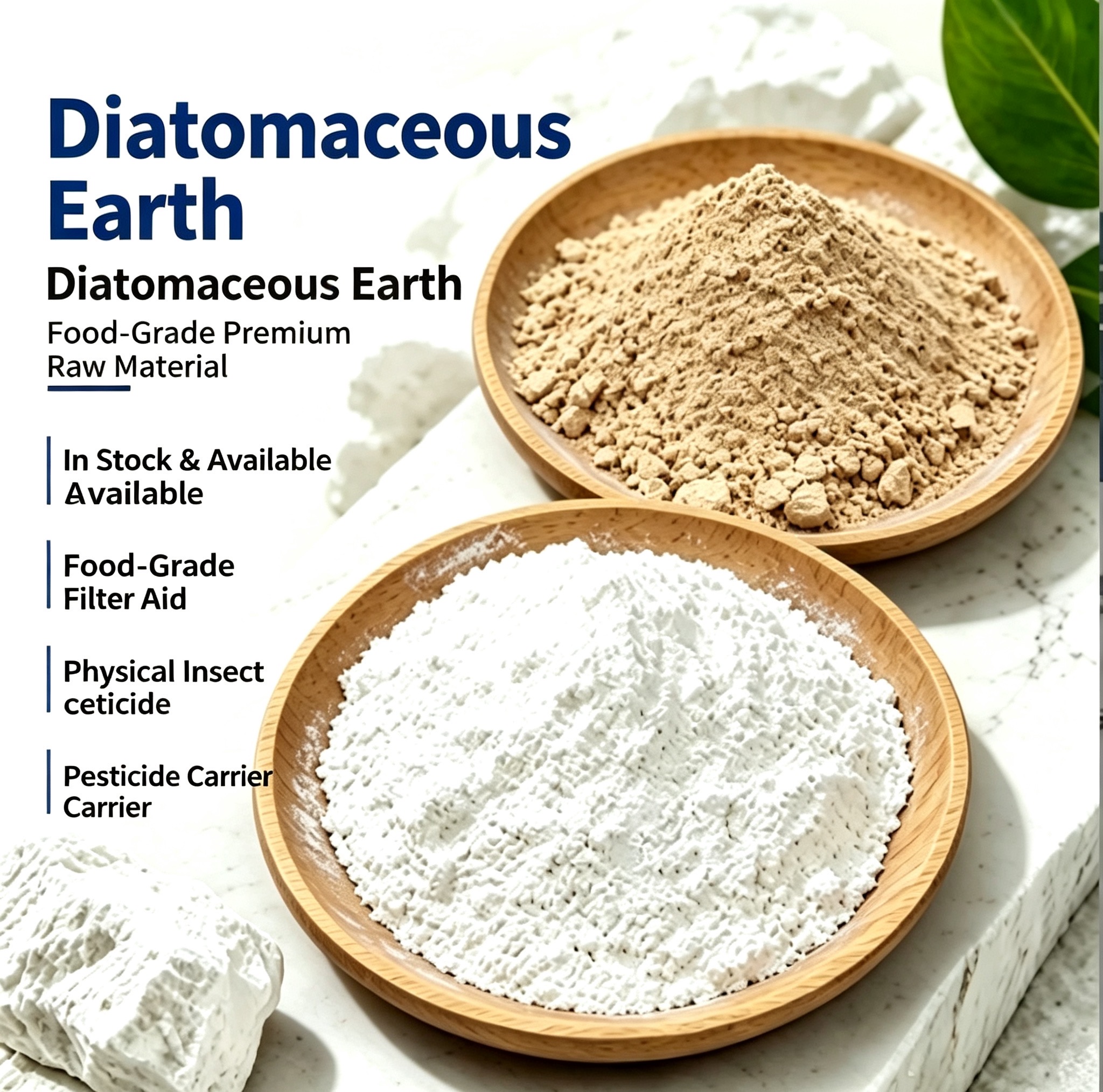
Main Advantages of Diatomaceous Earth
Natural Porous Structure: Diatomaceous Earth is characterized by a naturally porous structure formed from fossilized diatom remains. Its internal pores contribute to its filtration and absorption properties, making it suitable for a variety of industrial applications.
Filtration Performance: Diatomaceous Earth is widely used as a filtration aid in liquid filtration and solid-liquid separation. The appropriate grade can help remove suspended particles from liquids when used with a compatible filtration system.
High Specific Surface Area: The porous structure of Diatomaceous Earth provides a relatively large specific surface area. This feature makes it useful in applications where surface contact and absorption properties are important.
Lightweight Mineral Material: Compared with many conventional mineral fillers, Diatomaceous Earth can have a relatively low bulk density. This characteristic makes it suitable for selected lightweight filler formulations and industrial products.
Multiple Industrial Applications: Diatomaceous Earth can be used in filtration, water treatment, chemical processing, paints, coatings, rubber, plastics, agriculture and environmental materials.
Flexible Particle Sizes: Different particle sizes and fineness levels can be selected according to the requirements of filtration systems, manufacturing processes and final products.
Different Processing Grades: Natural, calcined and flux calcined Diatomaceous Earth are available depending on the product range. Different grades provide different physical properties for specific applications.
Customized Specifications: Particle size, fineness, packaging and selected technical indicators can be discussed according to customer requirements and actual product availability.
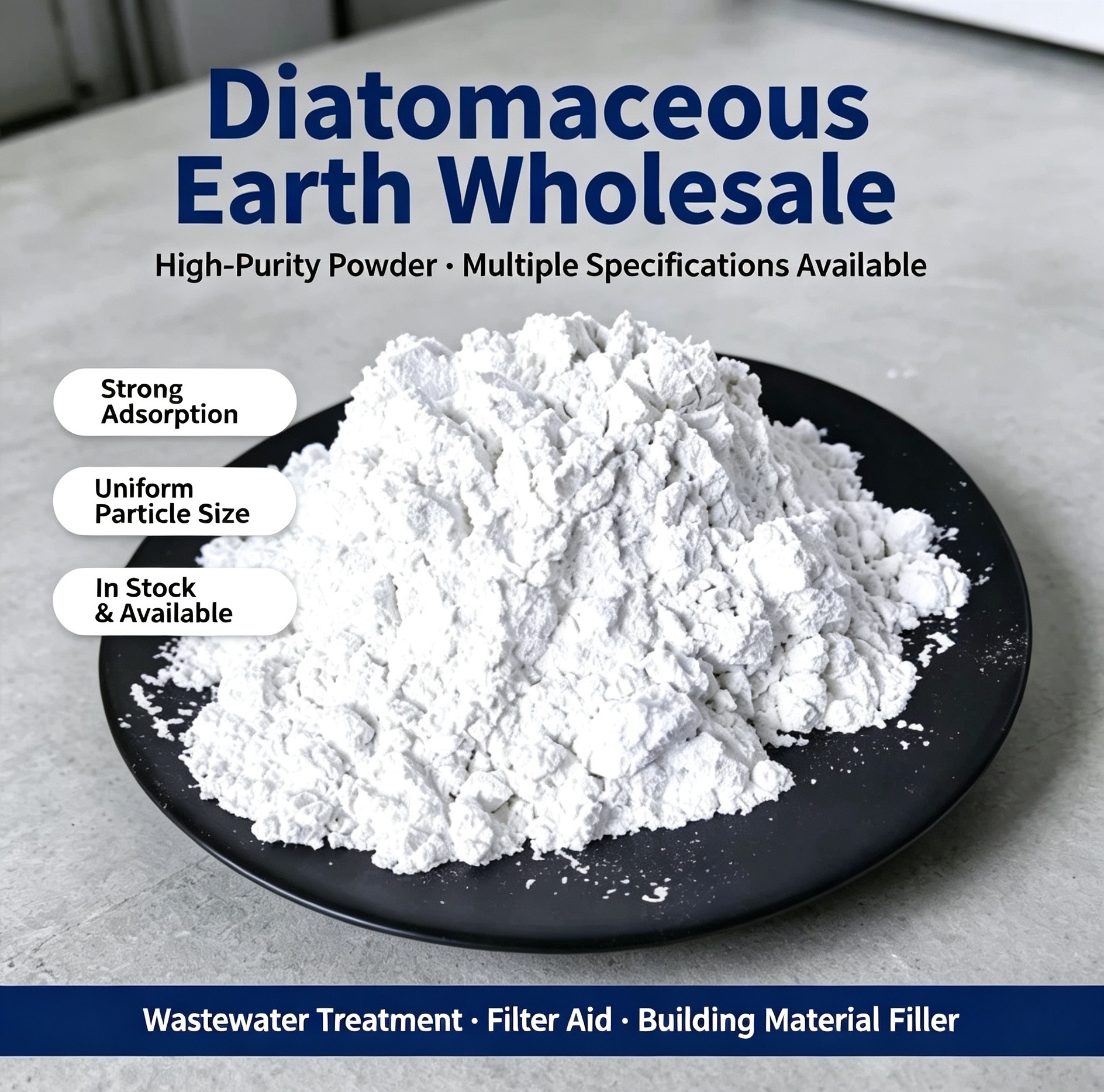
Types of Diatomaceous Earth
Natural Diatomaceous Earth: Natural Diatomaceous Earth is processed through basic operations such as crushing, drying and screening. It retains many of the natural characteristics of the original mineral material. Natural Diatomaceous Earth is used in selected absorption applications, mineral filler products, agricultural materials and other industrial processes.
Calcined Diatomaceous Earth: Calcined Diatomaceous Earth is produced through a high-temperature treatment process. Calcination changes certain physical properties of the mineral and can improve its suitability for specific industrial filtration and filler applications. The final characteristics depend on the raw material quality and processing conditions.
Flux Calcined Diatomaceous Earth: Flux Calcined Diatomaceous Earth is manufactured by adding a suitable fluxing agent during the calcination process. This treatment changes the particle characteristics and filtration properties of the material. Flux Calcined Diatomaceous Earth is used in certain industrial filtration applications where specific filtration performance is required.
Customers should select the appropriate Diatomaceous Earth grade according to the filtration equipment, liquid characteristics, required filtration rate and technical specifications.
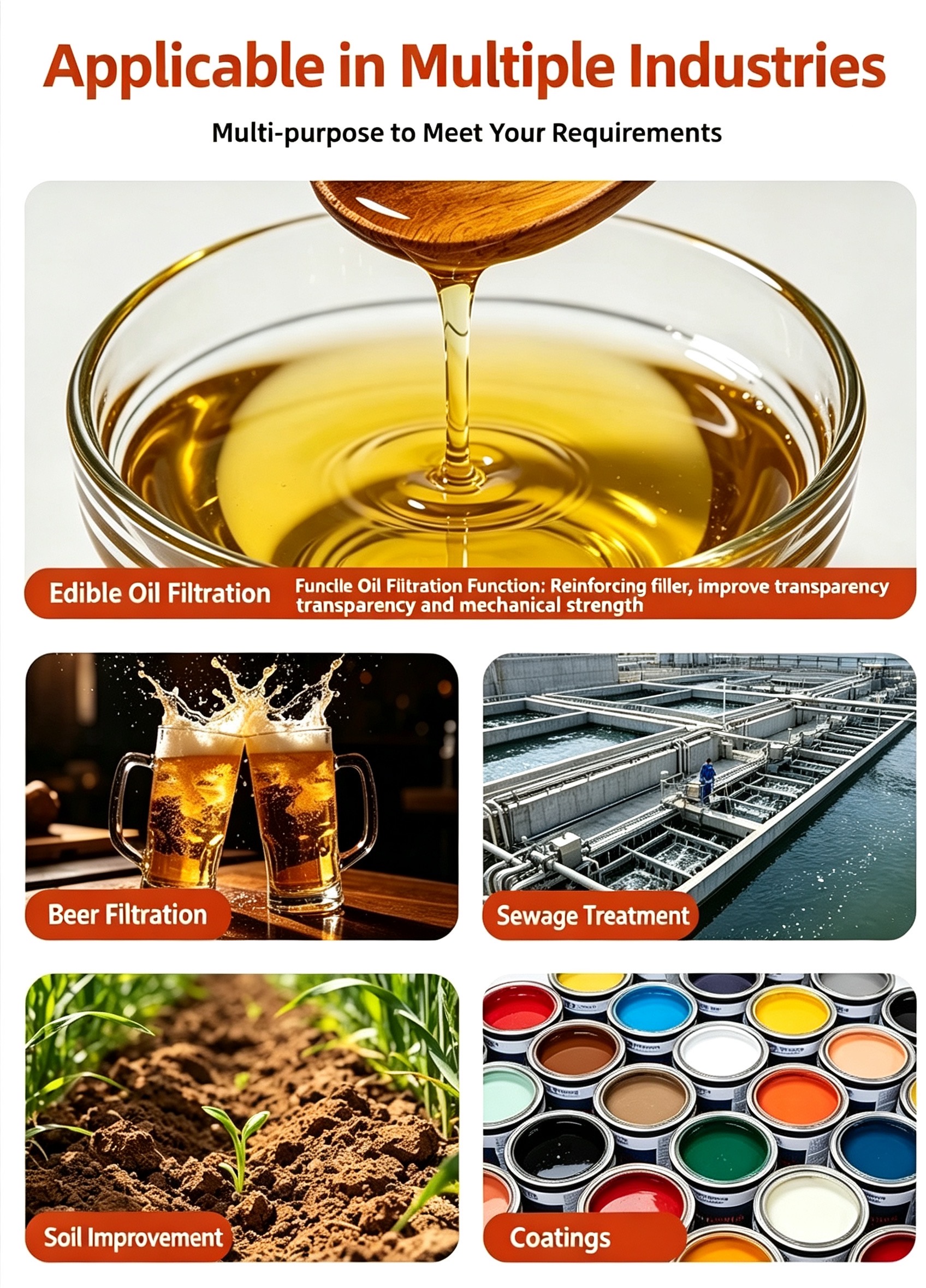
Main Applications of Diatomaceous Earth
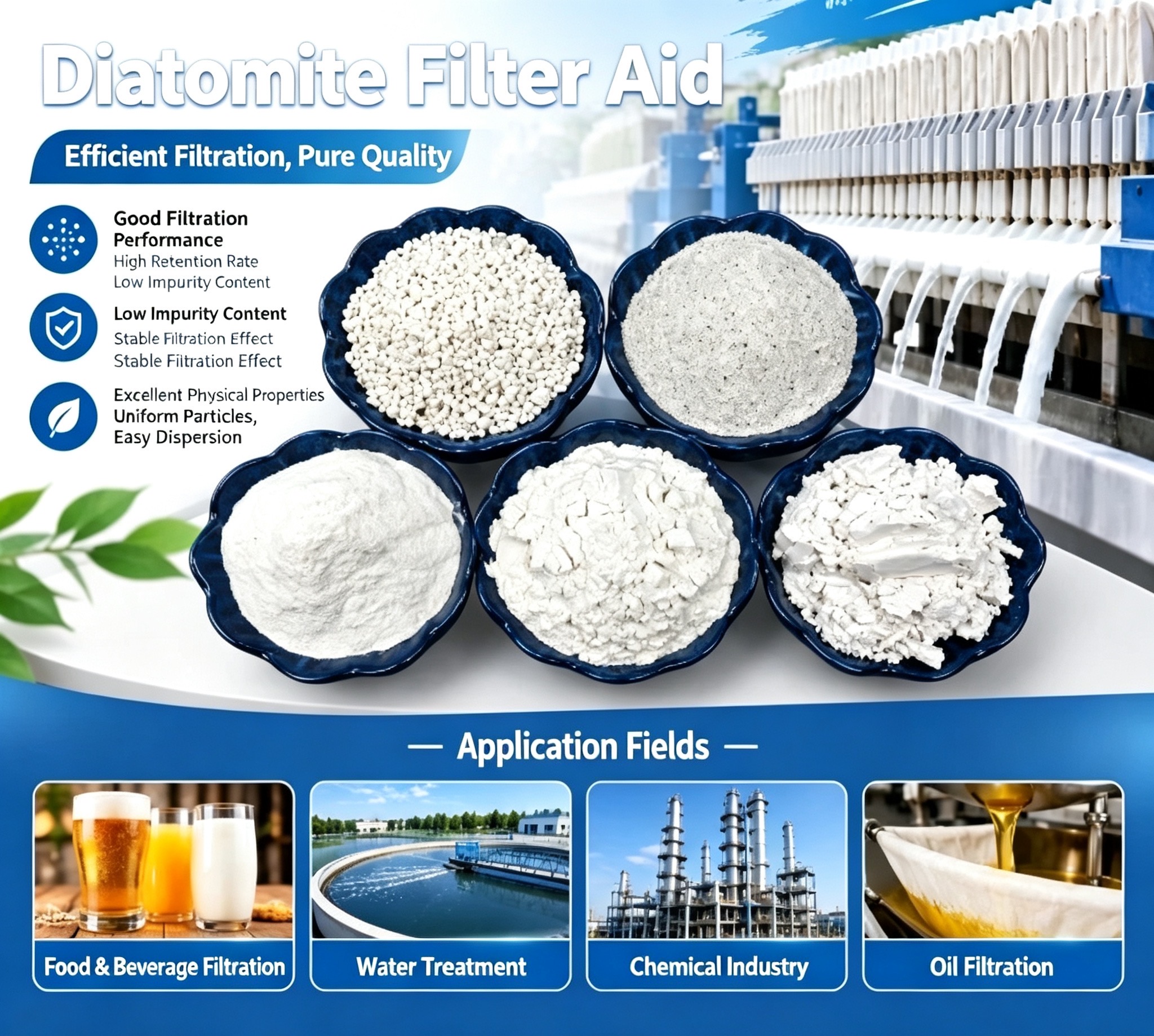
Industrial Liquid Filtration: Diatomaceous Earth is commonly used as a filtration aid in industrial liquid processing. Its porous particles can help retain suspended solids while allowing liquid to pass through the filter medium. It is suitable for selected filtration systems and solid-liquid separation processes.
Food and Beverage Filtration: Specific food-grade Diatomaceous Earth products that meet applicable food-contact regulations and quality requirements can be used in the filtration of beer, wine, fruit juice and other beverages. The selected grade must comply with the regulations of the destination market and the requirements of the actual application.
Water Treatment: Diatomaceous Earth can be used in certain water treatment filtration systems to help remove suspended impurities. Its suitability depends on water quality, filtration equipment, operating pressure and treatment requirements.
Chemical Industry: Diatomaceous Earth is used as a filtration aid and functional mineral filler in selected chemical manufacturing processes. It can support filtration operations and provide useful physical characteristics in industrial formulations.
Paints and Coatings: Diatomaceous Earth can be used as a functional filler in selected paint and coating formulations. Depending on the grade and formulation, it may help adjust texture, surface appearance and certain physical properties of the finished coating.
Rubber and Plastics: Selected grades of Diatomaceous Earth can be incorporated into rubber and plastic products as mineral fillers. The appropriate particle size and material characteristics should be selected according to the formulation and processing requirements.
Agricultural Applications: Certain suitable grades of Diatomaceous Earth are used in agricultural-related products and soil improvement materials. Specific applications depend on product composition, quality standards and local regulations.
Environmental Materials: Due to its natural porous structure and surface characteristics, Diatomaceous Earth can be used in the production of selected absorbent materials and environmental filtration products.
Processing and Quality Control
The processing of Diatomaceous Earth generally includes raw material extraction, selection, crushing, drying, grinding, classification and packaging. Different processing procedures are selected according to the final product grade and intended application.
First, suitable diatomaceous mineral raw materials are selected according to the required quality standards. The raw materials are then crushed and processed to obtain the desired particle size. Drying is carried out to control moisture content and prepare the material for further processing.
For products requiring specific physical characteristics, additional calcination or flux calcination processes may be used. These processes can modify the properties of Diatomaceous Earth and make it suitable for selected filtration or industrial applications.
After processing, the material is screened and classified according to particle size and fineness. Depending on customer requirements, product inspection may include appearance, moisture content, particle size distribution and other technical indicators.
We focus on product specification management and batch consistency to help customers select suitable Diatomaceous Earth for their manufacturing processes. Detailed technical data can be discussed and confirmed before bulk orders.
Technical Specifications
| Specification | Details |
|---|---|
| Product Name | Diatomaceous Earth |
| Main Material | Natural Diatomaceous Earth |
| Main Composition | Silica (SiO₂) |
| Product Types | Natural / Calcined / Flux Calcined |
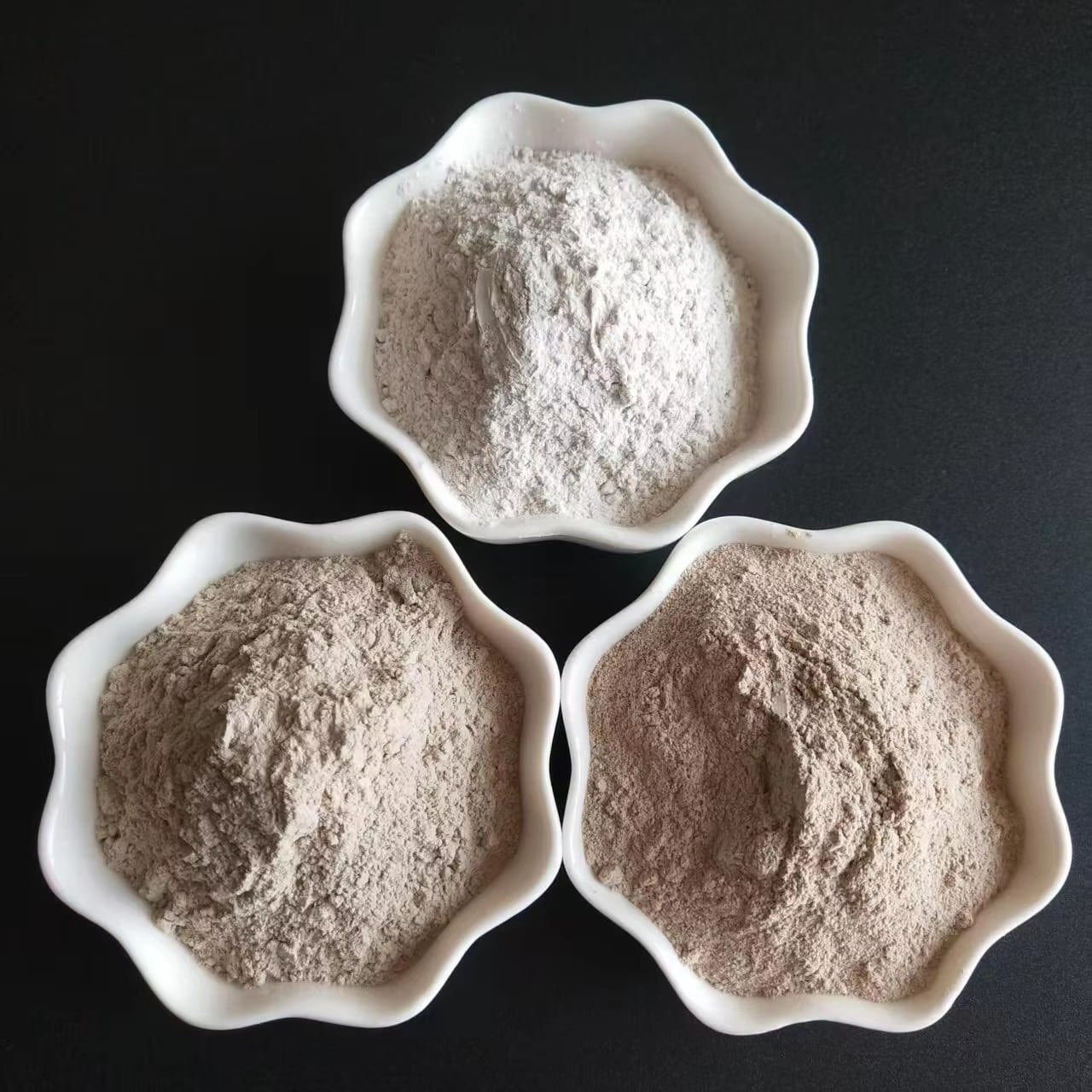
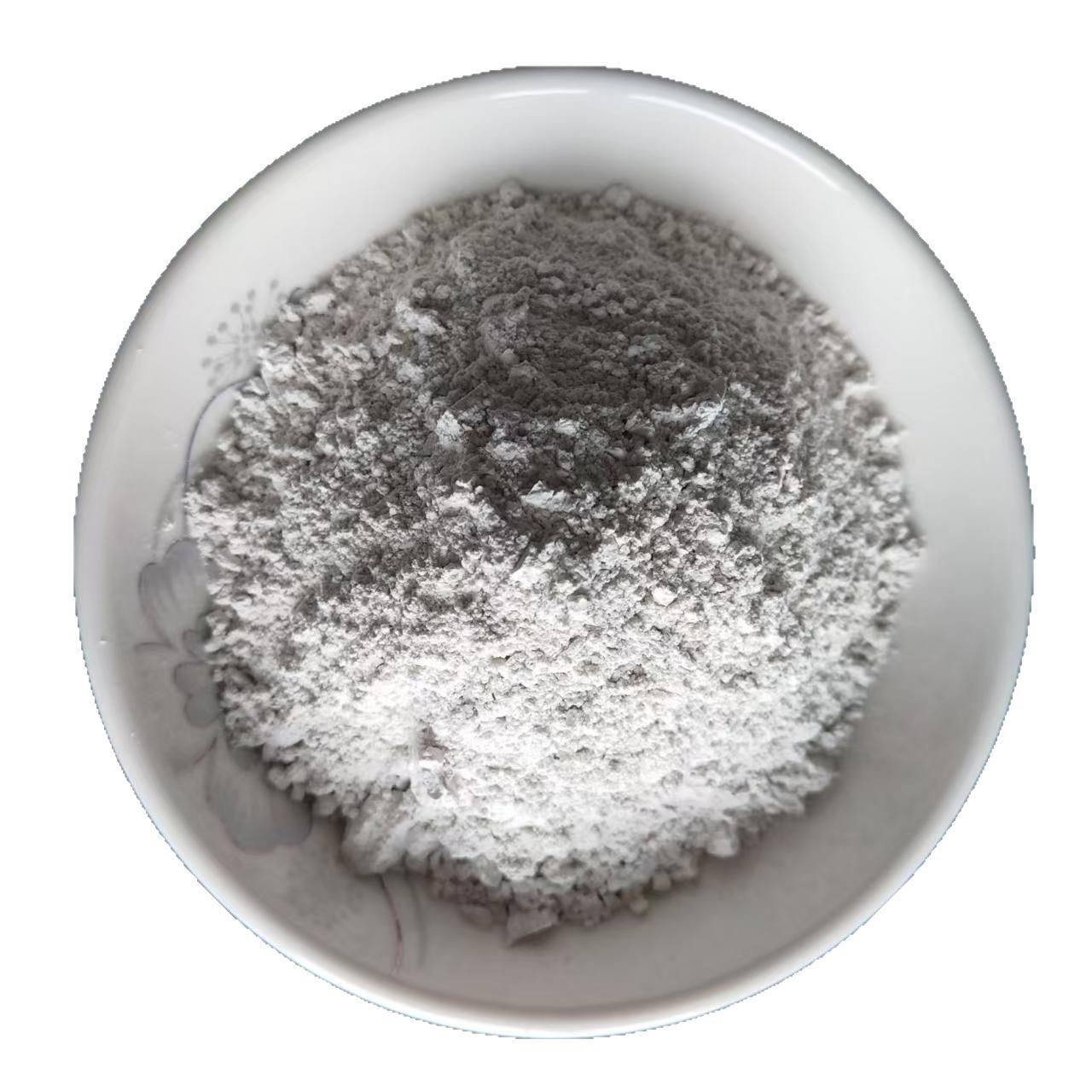
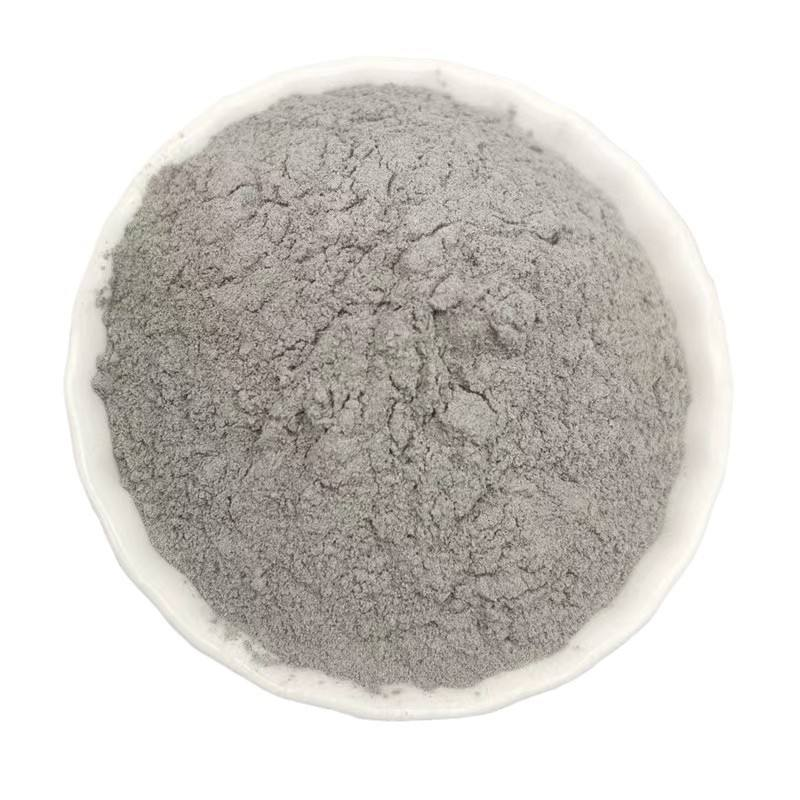
| Available Colors | White / Off-white / Light Grey |
| Product Form | Powder |
| Fineness | Customizable |
| Particle Size | Customized According to Requirements |
| Moisture Content | According to Product Grade |
| Bulk Density | According to Product Grade |
| Main Features | Porous Structure / High Surface Area |
| Main Applications | Filtration / Absorption / Mineral Filler |
| Processing | Crushing / Drying / Grinding / Screening / Calcination |
| Packaging | 25kg Bags / Jumbo Bags |
| Customization | Available |
The above specifications are for product selection reference. Actual chemical composition, silica content, particle size, moisture content, bulk density and other technical indicators should be confirmed according to the specific product grade and laboratory test report.
Packaging and Transportation
Diatomaceous Earth can be supplied in different packaging options according to product fineness, order quantity and transportation requirements. Common packaging includes 25kg woven bags with inner plastic liners, jumbo bags and other customized packaging solutions.
For export orders, packaging can be arranged according to the destination market, shipping method and customer requirements. Product labels, packaging marks and outer packaging details can also be discussed before shipment.
We understand that proper packaging is important for maintaining the condition of Diatomaceous Earth during transportation and storage. Suitable packaging solutions can be selected according to the particle size, moisture requirements and order volume.
For wholesale buyers and industrial manufacturers, we can discuss bulk packaging and long-term supply arrangements according to the purchasing plan.
Why Choose Our Diatomaceous Earth?
We focus on the processing and supply of non-metallic mineral products, including Diatomaceous Earth for different industrial applications. We pay attention to raw material selection, processing procedures, product specifications and order requirements.
Different grades of Diatomaceous Earth can be discussed according to the intended use, including Natural Diatomaceous Earth, Calcined Diatomaceous Earth and other suitable processing grades. Whether you are a filtration material manufacturer, water treatment company, chemical producer, paint factory or mineral distributor, we can help identify suitable specifications based on your application requirements.
We support product specification discussions, sample inquiries, customized packaging and bulk purchasing arrangements. Our goal is to provide suitable Diatomaceous Earth products for customers in different industrial markets.
If you are looking for a reliable Diatomaceous Earth supplier for filtration, absorption or mineral filler applications, please contact us with your required grade, particle size, quantity and intended use. Our team can help you confirm the appropriate product specifications.
Frequently Asked Questions
Q1: What is the main composition of Diatomaceous Earth?
A: The main component of Diatomaceous Earth is silica (SiO₂). The actual silica content varies depending on the mineral deposit and product grade.
Q2: What types of Diatomaceous Earth are available?
A: Common types include Natural Diatomaceous Earth, Calcined Diatomaceous Earth and Flux Calcined Diatomaceous Earth. Each type has different physical properties and industrial applications.
Q3: Can Diatomaceous Earth be used for filtration?
A: Yes. Due to its natural porous structure, Diatomaceous Earth is widely used as a filtration aid in various liquid filtration and solid-liquid separation processes.
Q4: What packaging options are available?
A: Common packaging options include 25kg bags and jumbo bags. Other packaging solutions can be discussed according to order requirements.
Q5: Can the fineness of Diatomaceous Earth be customized?
A: Yes. Different fineness levels and particle size specifications can be discussed according to actual product availability and customer requirements.
Q6: Can samples be provided before bulk purchasing?
A: Sample arrangements can be discussed according to the selected grade, particle size and purchasing requirements. Customers are encouraged to confirm the intended application before selecting a sample.