
 EN
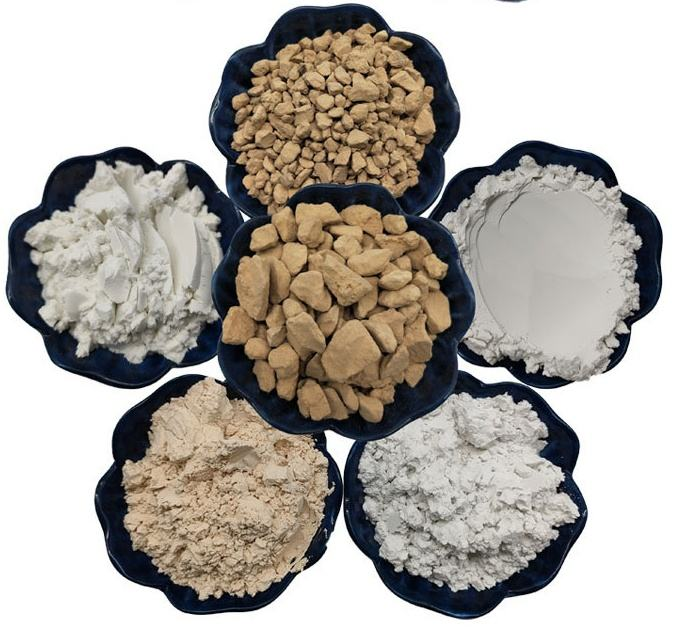
Why Standard Diatomaceous Earth Underperforms in Industrial Filtration
Standard diatomaceous earth (DE) grades introduce unnecessary risk into industrial filtration systems because their inherent physical variability defies the consistency modern manufacturing demands. Mined from natural deposits, raw diatom frustules differ widely in shape and size—yet generic processing yields only a broad, poorly controlled particle distribution. This inconsistency directly undermines filter cake integrity: some layers remain too open, permitting turbidity breakthrough, while others compact prematurely and restrict flow. An industry review found that off-the-shelf DE can reduce flow rates by up to 30% within the first 200 hours of operation due to fine fragment migration and surface blinding (Global Industry Standards Report 2022).
Mineral composition adds another layer of unpredictability. Raw ore silica content, clay inclusions, and iron oxide levels fluctuate daily at the quarry face—leading to variable cake compressibility and erratic electrostatic charge. These shifts degrade filtrate clarity without warning, forcing process engineers to either derate system capacity or tolerate widening gaps between target and actual throughput. Such compromises are untenable in high-volume beverage, chemical, or pharmaceutical production. Ultimately, standard DE shifts the cost of natural inconsistency onto filtration equipment—while custom-engineered specifications place that responsibility where it belongs: with the processing partner.
How Custom Diatomaceous Earth Grades Enhance Filter Efficiency and Reliability
Manufacturers of industrial filtration systems increasingly recognize that off-the-shelf diatomaceous earth fails to deliver consistent throughput or clarity across dynamic process conditions. Custom-engineered DE grades resolve this by enabling precise control over two foundational properties: particle size distribution and calcination profile. When these parameters are tightly specified, filter media can be tuned to specific operational demands—improving capacity, extending run length, and ensuring effluent quality.
Precision-engineered particle size distribution for optimal flow–clarity balance
The pore network of a DE filter cake functions as a dynamic sieve, where interception efficiency depends critically on diatom size, shape, and uniformity. A narrow, deliberately engineered particle size distribution ensures formation of a structurally consistent, low-resistance cake. Fine particles provide high clarity by capturing sub-micron contaminants; a calibrated proportion of coarser fragments maintains permeability. Unlike wide, uncontrolled distributions—which cause erratic compaction and turbidity spikes—custom blends yield stable differential pressure profiles and sustained effluent clarity, often below 0.5 NTU even during extended production cycles. This reliability extends service intervals and reduces backwash frequency—key advantages for high-volume beverage and pharmaceutical applications.
Controlled calcination to optimize porosity, hardness, and attrition resistance
Calcination permanently modifies the siliceous structure of diatomaceous earth. By precisely managing temperature, residence time, and atmospheric conditions, producers can engineer the optimal balance among porosity, mechanical strength, and resistance to particle breakdown. The following table illustrates typical property shifts across calcination stages:
| Calcination Stage | Relative Porosity | Hardness | Attrition Resistance |
|---|---|---|---|
| Natural (dried) | High | Low | Poor |
| Flux‑calcined (custom) | Moderately high | Enhanced | Very good |
| Fully calcined | Moderate | High (Mohs 5‑6) | Excellent |
Flux-calcined grades, for instance, sinter diatom fragments just enough to prevent pressure-induced cake cracking—while retaining micro-porosity essential for fine particulate removal. Increased hardness lowers media consumption: fewer fines detach and contaminate filtrate, reducing waste disposal and replacement costs. Superior attrition resistance also preserves bed integrity during backwashing, enabling more reuse cycles before media replacement. These precisely tuned properties deliver the repeatable, reliable performance that minimally processed standard DE cannot consistently achieve.
Real-World Impact: Validating Custom Diatomaceous Earth Performance in Beverage Filtration
In the beverage sector, switching to custom diatomaceous earth consistently delivers measurable operational gains. A fruit juice processor reduced filter aid consumption by 22% while maintaining effluent clarity below 0.5 NTU after replacing a generic grade with a tailored alternative (Filtration Industry Analysis 2023). Similarly, a large-volume brewery achieved a 15% reduction in filtration bed pressure drop—and extended average run lengths by three hours—through precision calcination and particle sizing. These improvements lower total filtration costs by cutting both media use and downtime for cleaning or replacement.
Beyond economics, custom DE supports stringent quality targets without sacrificing throughput. Tuning pore structure and permeability transforms the medium from a crude mechanical sieve into a predictable, high-capacity filtration platform. The result is consistent product clarity, reduced waste, and improved sustainability metrics. This real-world validation bridges lab-scale predictions with daily operational success—confirming why custom diatomaceous earth has become the benchmark for modern beverage filtration.
FAQ Section
What is diatomaceous earth (DE) used for in industrial filtration?
Diatomaceous earth is used as a filtration aid in industrial processes. It helps form filter cakes that capture fine particles, ensuring filtrate clarity and maintaining throughput efficiency.
Why does standard diatomaceous earth underperform in filtration?
Standard diatomaceous earth grades are inconsistent in size distribution and mineral composition, leading to filter cake instability, throughput reduction, and compromised clarity.
What advantages do custom-engineered grades of DE offer?
Custom-engineered grades of DE improve filtration performance by offering precise particle size distribution, controlled calcination for better porosity, hardness, and longer media lifespan.
How does calcination affect diatomaceous earth properties?
Calcination modifies DE’s siliceous structure, enhancing its porosity, mechanical strength, and resistance to particle breakdown, which improves overall filtration efficiency.
What industries benefit from custom diatomaceous earth grades?
Industries like beverage production, chemical processing, and pharmaceuticals benefit significantly due to the consistent throughput, clarity, and reduced waste provided by tailored DE grades.
Table of Contents
- Why Standard Diatomaceous Earth Underperforms in Industrial Filtration
- How Custom Diatomaceous Earth Grades Enhance Filter Efficiency and Reliability
- Real-World Impact: Validating Custom Diatomaceous Earth Performance in Beverage Filtration
-
FAQ Section
- What is diatomaceous earth (DE) used for in industrial filtration?
- Why does standard diatomaceous earth underperform in filtration?
- What advantages do custom-engineered grades of DE offer?
- How does calcination affect diatomaceous earth properties?
- What industries benefit from custom diatomaceous earth grades?