
 EN
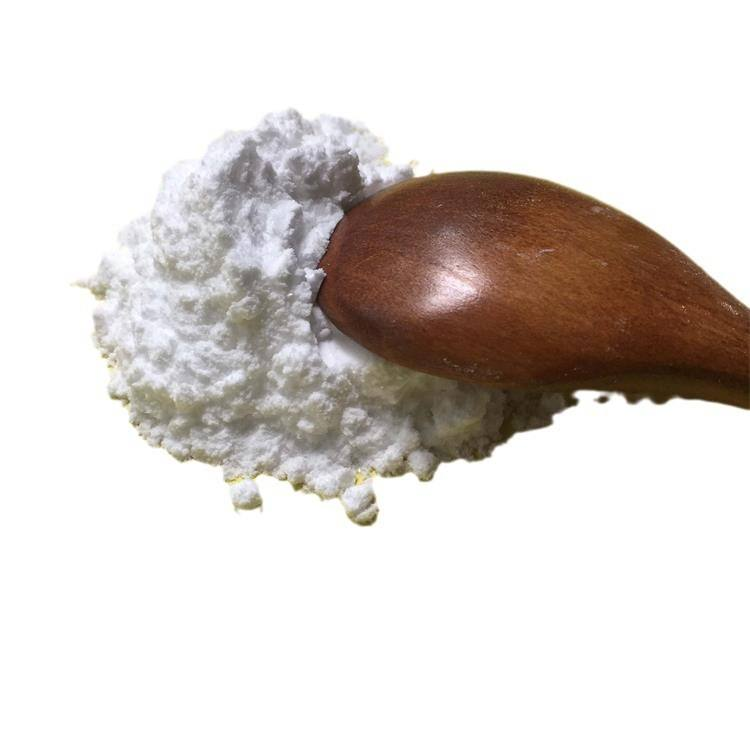
Why Calcium Carbonate Powder Is the Go-To Filler for Plastics and Paints
Cost-effective performance: Balancing filler loading, mechanical properties, and processing efficiency
Calcium carbonate powder lowers formulation cost because it is significantly less expensive than polymer resin, titanium dioxide, and many performance additives. Compounders routinely replace 10–30% of resin with fine-ground calcium carbonate while retaining sufficient stiffness for rigid packaging, pipes, and profiles—reducing both raw material cost and energy per unit output. The trade-off is real: higher filler loading increases modulus but can reduce impact strength and melt flow. Processors manage this by optimizing particle size, surface treatment, and loading level to maintain extrusion or injection molding stability. A well-chosen grade also improves thermal conductivity, shortening cooling time and increasing line speed. Finer grades disperse more readily but raise compound viscosity; coarser grades lower viscosity yet may compromise surface finish. In paint manufacturing, replacing part of the binder and pigment with calcium carbonate cuts cost without sacrificing hiding power—especially when paired with titanium dioxide. The most efficient formulations use the highest loading that still meets impact, tensile, and rheology targets. This balance transforms a low-cost filler into a strategic cost-performance tool.
Functional versatility: Enhancing stiffness, opacity, gloss, and rheology across formulations
In plastics, calcium carbonate raises flexural modulus and reduces shrinkage, helping parts hold tighter tolerances. It improves dimensional stability and surface hardness in polypropylene, PVC, and engineering compounds. In paint and coatings, it boosts opacity by spacing titanium dioxide particles and enhancing dry hiding. It enables precise gloss control—from matte to semi-gloss—without increasing resin demand. It also supports higher pigment volume concentration (PVC) while preserving film strength and scrub resistance. Rheology benefits apply across both systems: in plastics, optimized particle size and surface coating lower melt viscosity and improve mold filling; in paints, calcium carbonate enhances flow, leveling, and sag resistance. Because it is white, odorless, and chemically stable, it integrates seamlessly into water-based and solvent-based systems. This functional breadth explains its widespread use across rigid, flexible, and coating applications.
Key Performance Metrics for Bulk Calcium Carbonate Powder
Whiteness, particle size distribution, and oil absorption — how specs drive compatibility and dispersion
Calcium carbonate powder performance hinges on three core, measurable specifications: whiteness, particle size distribution (PSD), and oil absorption. Whiteness above 90% ensures clean tinting in white and pastel formulations—and reduces reliance on titanium dioxide. PSD governs packing density, gloss, and dispersion behavior: narrow distributions below 10 µm enhance surface smoothness and opacity; coarser or broader grades support matting and lower viscosity. Oil absorption reflects binder or plasticizer demand—typically 40–60 mL/100 g for ground calcium carbonate (GCC) and 60–90 mL/100 g for precipitated calcium carbonate (PCC). Higher oil absorption can inflate formulation cost and limit practical loading. Surface treatment lowers absorption, improves dispersion, and enables higher filler content without compromising flow. These specs must be evaluated together—not in isolation—to match the grade to mixing equipment, resin system, and final rheology.
| Spec | Ground calcium carbonate | Precipitated calcium carbonate |
|---|---|---|
| Oil absorption | 40–60 mL/100 g | 60–90 mL/100 g |
| Typical particle size | 1–10 µm | 0.5–2 µm |
pH stability and batch-to-batch consistency: Non-negotiables for scalable compounder operations
For compounders running continuous lines, pH stability and batch-to-batch consistency are critical to avoiding costly downtime. Bulk calcium carbonate should remain mildly alkaline—pH 8–10—to prevent acid-catalyzed degradation in PVC and other sensitive resins. Stable pH also protects heat stabilizers and pigments from premature breakdown. Batch consistency matters more than peak performance in a single lot: variations in particle size, moisture, or surface treatment can shift melt viscosity, torque, and color output. Leading suppliers monitor laser diffraction, color tone, and top cut across production lots. Tight control of mean particle size and oil absorption minimizes reformulation and line stops. Paint and coating manufacturers rely on the same consistency: pH drift can trigger viscosity shifts, pigment flooding, or poor shelf stability. Consistent calcium carbonate powder locks in extrusion parameters and wet-end rheology—cutting waste, rework, and unplanned downtime. Without it, even the lowest-cost filler becomes a hidden cost driver.
Optimizing Calcium Carbonate Powder Use in Plastic Compounding
Dispersion challenges and solutions: Surface treatment, coupling agents, and melt-processing parameters
Calcium carbonate’s value in polyolefin, PVC, and engineering compounds depends entirely on uniform dispersion. Untreated fine particles tend to agglomerate due to high surface energy and poor polymer wetting—creating strength-limiting voids and surface defects. Surface treatment with stearic acid or other fatty acid coatings reduces interparticle attraction and improves compatibility with nonpolar matrices. Coupling agents such as silanes or titanates further bridge mineral surfaces and polymer chains—particularly effective in filled polypropylene or polyamide systems. Melt-processing parameters are equally important: moderate screw speed, sufficient back pressure, and barrel temperatures above the polymer’s melting point help break agglomerates without degrading the resin. A two-stage screw profile with dispersive mixing elements typically delivers better wetting than single-stage mixing. Dispersion quality should be verified through pressure rise analysis, filter tests, or microscopy before scale-up. This integrated approach ensures stable output and consistent mechanical performance in large-volume compounding.
Trade-offs decoded: Why higher loading improves stiffness but may reduce impact strength or melt flow
Higher filler loading increases flexural modulus, hardness, and dimensional stability by restricting polymer chain mobility—but that same restriction can reduce elongation at break and notched impact strength, especially with poor dispersion or coarse particles. Melt flow typically declines as filler volume rises due to increased particle-particle friction. A balanced formulation commonly uses 10–30% treated calcium carbonate in general-purpose compounds; high-stiffness masterbatches may exceed this but require impact modifiers or processing aids. The relationship is not linear—particle size, surface coating, and matrix type all shift the optimum:
| Loading level | Stiffness | Impact strength | Melt flow |
|---|---|---|---|
| Low (5–15%) | Moderate gain | Minimal loss | Slight reduction |
| Medium (20–40%) | Strong gain | Noticeable loss unless modified | Clear reduction |
| High (>40%) | Highest stiffness | Requires toughening | May need lubricants |
Processors should map mechanical and rheological targets before selecting loading level—treating calcium carbonate not as a passive diluent, but as an active design variable.
Maximizing Calcium Carbonate Powder Performance in Paint and Coating Formulations
Calcium carbonate powder serves as both a pigment extender and a functional filler, enabling paint formulators to reduce dependence on expensive titanium dioxide while maintaining opacity, whiteness, and film integrity. To maximize performance, chemists must match the calcium carbonate grade to the coating system—not default to the lowest-cost option.
| Calcium Carbonate Type | Key Characteristics | Best-Fit Paint Applications |
|---|---|---|
| Ground Calcium Carbonate (GCC) | Economical; wider particle size distribution | Interior decorative paints, primers, and textured coatings |
| Precipitated Calcium Carbonate (PCC) | Controlled particle size and shape; higher brightness and purity | Premium architectural paints and high-opacity topcoats |
| Surface-Treated Calcium Carbonate | Improved dispersion and resin compatibility | Exterior, weather-resistant, and high-performance industrial coatings |
In interior and exterior paints, optimized calcium carbonate improves scrub resistance, adhesion, and finish quality. Low oil absorption allows higher pigment loading without harming flow or leveling. For exterior exposure, finer and surface-treated grades enhance UV stability and reduce cracking or peeling over time. In high-hide formulations, PCC or treated grades with narrow particle size distribution improve covering power—and reduce the number of coats required.
Frequently Asked Questions
What is the primary advantage of calcium carbonate powder in plastic formulations?
Calcium carbonate powder reduces raw material costs while enhancing mechanical properties such as stiffness and dimensional stability.
How does calcium carbonate improve paint performance?
Calcium carbonate enhances opacity, gloss, and rheology while reducing dependence on expensive pigments like titanium dioxide.
What are the differences between ground and precipitated calcium carbonate?
Ground calcium carbonate is cost-effective with a wider particle distribution, while precipitated calcium carbonate offers controlled particle size, higher brightness, and purity.
Why is batch consistency important for bulk calcium carbonate?
Batch consistency ensures stable production and avoids issues like viscosity shifts, pigment flooding, and poor shelf stability.
Can calcium carbonate affect impact strength in plastic compounds?
Yes, higher loading levels can reduce impact strength, but using treated calcium carbonate and impact modifiers can offset this effect.
Table of Contents
- Why Calcium Carbonate Powder Is the Go-To Filler for Plastics and Paints
- Key Performance Metrics for Bulk Calcium Carbonate Powder
- Optimizing Calcium Carbonate Powder Use in Plastic Compounding
- Maximizing Calcium Carbonate Powder Performance in Paint and Coating Formulations
-
Frequently Asked Questions
- What is the primary advantage of calcium carbonate powder in plastic formulations?
- How does calcium carbonate improve paint performance?
- What are the differences between ground and precipitated calcium carbonate?
- Why is batch consistency important for bulk calcium carbonate?
- Can calcium carbonate affect impact strength in plastic compounds?