
 EN
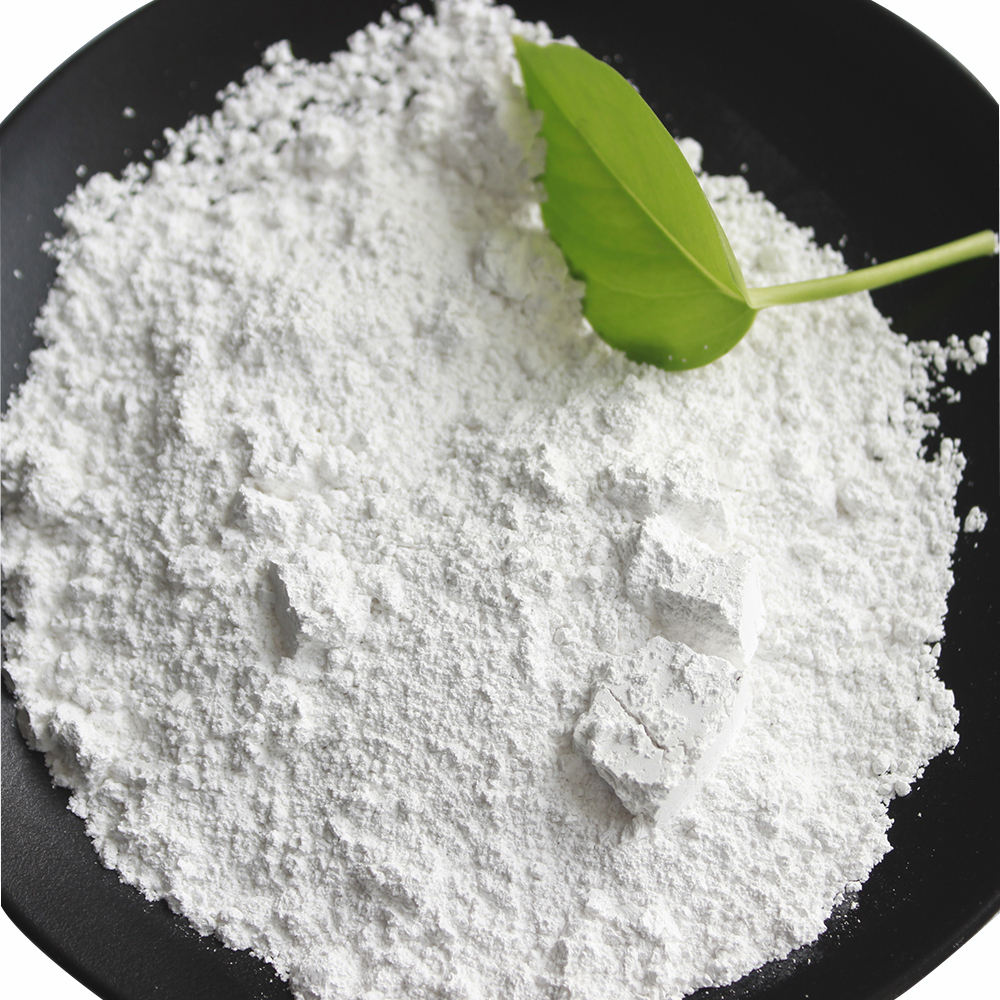
Why Calcium Carbonate Marble Outperforms Other GCC Sources in Ceramic Bodies
Reduced Drying and Firing Shrinkage Through Controlled Decomposition
Marble-derived ground calcium carbonate (GCC) exhibits a uniquely narrow and predictable decarbonation profile—occurring between 800°C and 900°C—due to its highly crystalline, compact calcite structure. This controlled CO₂ release generates uniform micro-porosity before vitrification begins, enabling more gradual drying shrinkage and minimizing internal stresses that cause warping or cracking. Its lower specific surface area reduces water demand in the body slurry, supporting higher solids loading without sacrificing flowability. As a result, evolved gases escape cleanly, preserving matrix integrity and dimensional stability. This thermal behavior aligns precisely with standard fast-firing cycles, delivering consistent outcomes where chalk- or limestone-derived GCC often introduce variability. A 2023 internal audit by a leading tile manufacturer confirmed that switching from limestone GCC to marble GCC reduced average drying shrinkage by 0.8%—a decisive improvement for large-format tile production.
Enhanced Chemical Durability via In Situ CaO Integration into the Silicate Network
The CaO generated during marble’s decomposition is exceptionally reactive and integrates rapidly into the developing glassy phase, promoting robust in situ formation of calcium silicates and aluminosilicates. This strengthens the fired matrix and significantly improves resistance to chemical attack. Marble’s superior calcitic purity—typically >99% CaCO₃—minimizes impurities like MgCO₃, alkalis, and iron oxides that weaken microstructural homogeneity and foster efflorescence or leaching. The following table highlights this compositional advantage:
| Property | Marble-Derived GCC | Chalk-Derived GCC | Limestone GCC |
|---|---|---|---|
| Typical CaCO₃ Purity (%) | >99 | 95–98 | 96–99 |
| MgCO₃ Content (%) | <0.5 | 0.5–1.5 | 0.5–3.0 |
| Alkali & Iron Oxides (%) | <0.1 | 0.3–0.8 | 0.2–1.0 |
A 2022 acetic acid corrosion test (ACV) found porcelain tiles formulated with marble GCC exhibited 15% less mass loss than those using high-impurity limestone GCC—confirming markedly improved performance in chemically aggressive environments such as commercial kitchens and industrial facilities.
Proven Performance: 23% Lower Linear Shrinkage with 12% Marble-Derived GCC in Porcelain Tiles
A 2023 case study by a top-tier ceramic OEM quantified real-world impact: replacing standard limestone GCC with 12 wt% high-purity (5 µm median size) marble-derived GCC in a porcelain floor tile body yielded a 23% reduction in total linear shrinkage under identical fast-firing conditions (1200°C peak, 45-minute cycle). This translated directly to a 40% reduction in calibre variation from a single press—virtually eliminating post-firing sizing—and lowered dimensional defect rates to under 2%. These results move beyond theoretical benefits to demonstrate measurable gains in precision, yield, and cost control—affirming marble GCC as a critical lever for optimizing modern tile manufacturing.
Optimizing Particle Size Distribution of Calcium Carbonate Marble for Ceramic Processing
Tailoring Median Size (2–5 µm) for Body Slurries to Balance Rheology and Green Strength
In ceramic bodies, the median particle size (D50) of marble-derived GCC governs both slurry rheology and green strength. A D50 of 3 µm optimizes bi-modal packing with clays and feldspars—reducing viscosity by up to 25% versus coarser distributions while avoiding the excessive water demand associated with ultrafines (<0.5 µm). This balance enhances inter-particle friction and void filling, resulting in a 20% higher green modulus of rupture (MOR) compared to 7 µm powders—without compromising extrusion or pressing performance. Consistent particle size also ensures uniform CaO release during firing, supporting in-situ anorthite formation and reinforcing the fired microstructure. Engineered milling to maintain D50 within the 2–5 µm range thus delivers slurries with low yield stress, high green strength, and reliable dimensional control.
Ultrafine Fraction (1–2 µm) Requirements for Glaze Suspension Stability and Gloss Development
For glazes, suspension stability and final surface quality hinge on the ultrafine fraction of marble-derived GCC. Particles sized 1–2 µm provide optimal surface area to form a stable colloidal network—preventing sedimentation and enabling uniform application thickness. Glazes containing 8–12% GCC with D50 = 1.5 µm typically show zero phase separation after 24 hours and require 30% less deflocculant than those using coarser fillers. During firing, these fine particles decompose early (700–900°C), generating controlled micro-porosity that enhances opacity and light scattering—reducing opacifier use by ~15%. Simultaneously, the released CaO lowers melt viscosity, improving flow and leveling. Practical testing on sanitary ware glazes shows that a 1.2 µm marble-derived GCC increases gloss from 70 to 82 units and halves firing-induced pinholes—demonstrating how precise PSD engineering enables both processing efficiency and premium aesthetics.
Calcium Carbonate Marble’s Role in High-Performance Glaze Formulation
Boosting Whiteness, Opacity, and Surface Smoothness in Sanitary Ware Glazes
Marble-derived GCC is a functional cornerstone in high-performance sanitary ware glazes—not merely as inert filler, but as an active contributor to whiteness, opacity, and surface finish. Its inherent ISO brightness (>95%) reduces reliance on costly opacifiers while delivering brilliant white surfaces. Crucially, its controlled decomposition between 700°C and 900°C creates a dense, closed-pore microstructure that scatters light efficiently—boosting hiding power and reducing body visibility. Concurrently, the liberated CaO acts as a network modifier, lowering melt viscosity and enhancing glaze flow and leveling. The result is a smooth, defect-free surface with exceptional gloss and minimal orange-peel texture—directly elevating perceived quality, durability, and market differentiation.
FAQ
Why is marble-derived GCC better than limestone GCC for ceramics?
Marble-derived GCC offers higher purity (>99% CaCO₃), narrower decarbonation profiles, and lower impurity levels, resulting in reduced shrinkage, enhanced chemical durability, and more consistent ceramic production.
How does marble GCC improve glaze formulations?
Its fine particle size enhances suspension stability, opacity, and gloss while reducing reliance on opacifiers and ensuring a defect-free surface with premium aesthetics.
What particle size is ideal for ceramic processing with marble GCC?
A median particle size of 2–5 µm achieves optimal packing, rheology, and green strength in body slurries, while particles of 1–2 µm are ideal for glazes.