
 EN
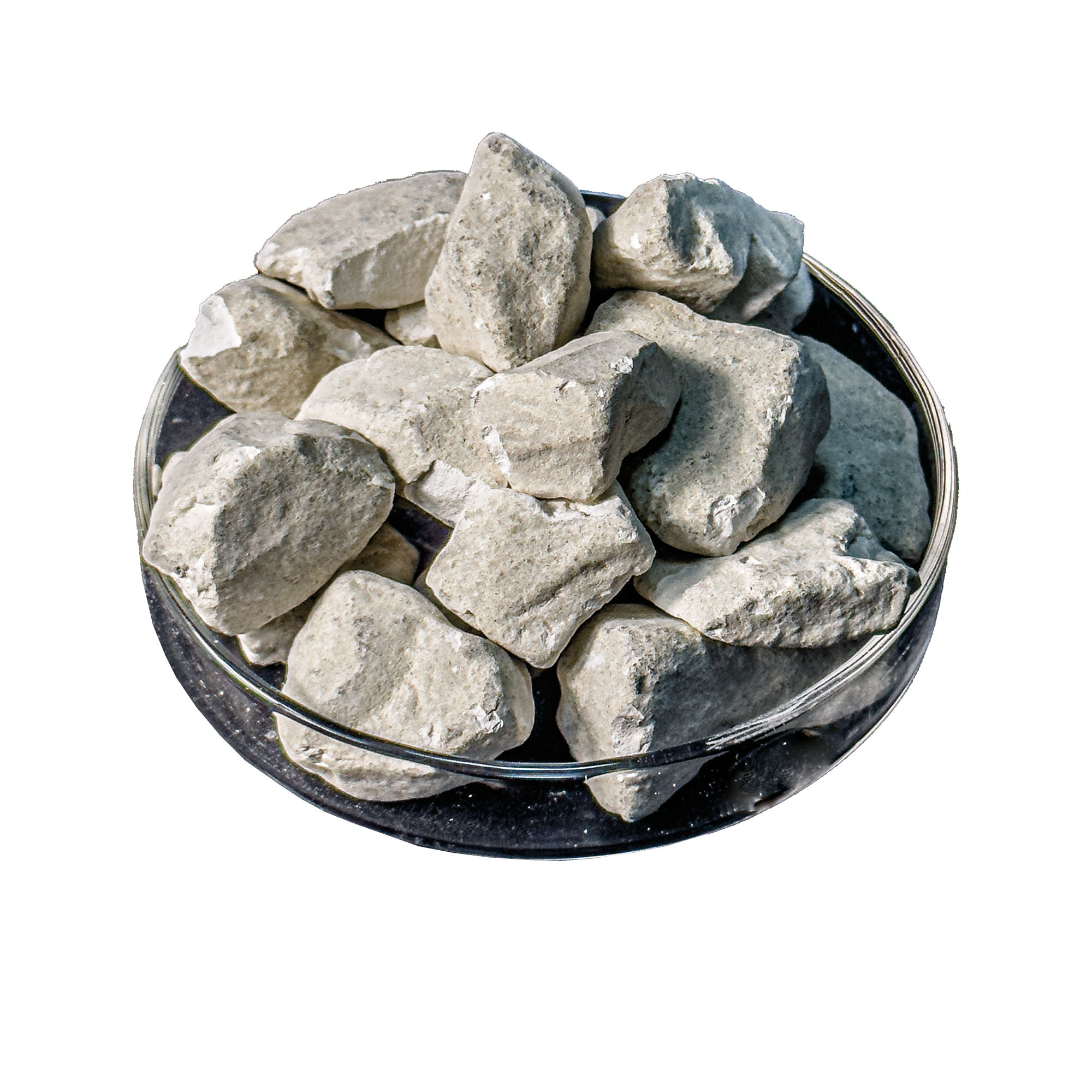
The Science Behind Quicklime in Water Treatment
pH Adjustment and Pathogen Inactivation Mechanisms
Quicklime (calcium oxide, CaO) is a high-strength alkaline reagent widely used in water treatment to raise pH and stabilize alkalinity. Upon contact with water, it undergoes slaking—an exothermic reaction forming calcium hydroxide (Ca(OH)₂) and releasing significant heat. This rapid pH elevation helps neutralize the acidity common in natural water sources, reduces corrosion in distribution pipes, and enhances chlorine disinfection efficiency, which declines sharply below pH 7.5.
Operators typically target pH 8.5–10 for drinking water stabilization; wastewater and sludge treatment often require pH >10 to achieve full pathogen inactivation. High pH disrupts microbial cell membranes, denatures proteins, and destabilizes viral envelopes—effects that scale with both pH level and contact time. In sludge treatment, lime-driven alkalinization also suppresses odors, stabilizes biosolids, and promotes precipitation of dissolved metals and phosphates, improving solids separation.
Because overdosing can elevate finished-water pH beyond regulatory limits (e.g., EPA’s secondary maximum contaminant level of 8.5–9.5), utilities monitor pH, alkalinity, and temperature continuously. Recarbonation—introducing CO₂ to form calcium carbonate—is commonly applied to reduce excess alkalinity before distribution, ensuring compliance and operational reliability.
Quicklime vs. Calcium Hydroxide: Efficacy, Reaction Kinetics, and Dosage Efficiency
Quicklime and calcium hydroxide (hydrated lime) both supply alkalinity but differ significantly in concentration, reactivity, and handling. Quicklime contains 90–95% available CaO by weight, whereas hydrated lime delivers only 72–74% available CaO equivalent. As a result, quicklime provides higher acid-neutralizing capacity per ton—reducing material volume, freight, and storage needs where slaking infrastructure exists.
Reaction kinetics further distinguish them: quicklime reacts vigorously during slaking, generating heat and enabling rapid pH adjustment—ideal for high-flow applications or emergency acid waste neutralization. Hydrated lime dissolves more gradually with minimal heat release, offering predictable feed control and eliminating the need for slaking equipment. It is typically applied as a slurry to mitigate dust hazards and simplify dosing at smaller facilities.
| Parameter | Quicklime (CaO) | Calcium hydroxide Ca(OH)₂ |
|---|---|---|
| Available CaO equivalent | 90–95% | 72–74% |
| Reaction with water | Exothermic slaking; rapid pH rise | Mild dissolution; slower pH rise |
| Handling profile | Requires dry storage and slaking | May be applied as slurry; lower dust |
| Typical selection driver | High neutralizing capacity per ton | Predictable feed and operational simplicity |
Quicklime for Environmental Remediation: Stabilization, Compliance, and Field Performance
Heavy Metal Immobilization Through Lime-Induced Precipitation and pH-Driven Speciation
Quicklime raises soil pH via its exothermic hydration reaction, releasing calcium and hydroxyl ions. This alkaline shift drives heavy metal immobilization by converting soluble species—such as Pb²⁺, Cd²⁺, and Zn²⁺—into insoluble hydroxides, carbonates, or silicates. Solubility for these metals drops sharply as pH rises from acidic to mildly alkaline conditions (pH 6–10), lowering leachate concentrations without altering total metal mass.
In practice, contractors apply quicklime through mechanical blending (e.g., pug mills) or in-situ slurry injection. Success hinges on uniform mixing, controlled moisture content, and sufficient reaction time—typically 7–28 days depending on soil type and target metals. Verification relies on standardized leaching tests, primarily the Toxicity Characteristic Leaching Procedure (TCLP), alongside site-specific protocols aligned with regulatory thresholds. ASTM C977 defines chemical purity and physical requirements for quicklime used in environmental stabilization.
Beyond immobilization, the same reaction induces soil solidification—reducing permeability and limiting contaminant migration toward groundwater or nearby drinking water sources. This dual role in stabilization and physical containment supports cost-effective brownfield redevelopment and Superfund site closure without requiring supplemental reagents.
Reliable Bulk Quicklime Supply: Logistics, Quality Assurance, and Handling Best Practices
Moisture Sensitivity, Transportation Modalities, and On-Site Storage Protocols
Quicklime is highly hygroscopic: even ambient humidity can initiate premature slaking, causing heat buildup, caking, and loss of reactive CaO. Uncontrolled moisture exposure poses safety risks—including steam generation and pressure buildup in sealed containers—and compromises treatment efficacy.
Transportation requires rigorous moisture protection. Sealed pneumatic tankers are standard for bulk delivery; for smaller volumes, moisture-resistant supersacks with polyethylene liners minimize air exchange. All transfer points—from loading dock to silo inlet—must be inspected for leaks, condensation, or wet residue.
On-site storage demands strict environmental control. Covered, ventilated silos equipped with desiccant breathers or humidity-controlled hoppers prevent moisture ingress. Flat outdoor storage is strictly prohibited. Weekly inspections of seals, vent filters, and discharge gates are essential. Transfer equipment must be thoroughly dried and purged with dry air before loading. Quicklime must never be stored near acids, water lines, or steam vents. First-in, first-out inventory rotation mitigates aging-related caking.
A 2023 industry review by a leading bulk chemical logistics provider found that proper silo desiccation extended usable quicklime shelf life by at least 90 days—significantly reducing waste, safeguarding personnel, and maintaining remediation timelines.
Proven Project Impact: Case Evidence and ROI from Bulk Quicklime Deployment
Field deployments across municipal water treatment and environmental remediation demonstrate that bulk quicklime consistently lowers chemical costs while enhancing process stability and regulatory compliance. Procurement decisions should prioritize delivered cost per available CaO equivalent, not raw tonnage. A 2023 utility benchmark found median delivered costs of $142 per dry ton for bulk quicklime versus $218 per dry ton for hydrated lime—a 35% unit-cost advantage before accounting for sludge reduction and handling efficiencies.
At a former metal-plating site, 5% bulk quicklime (by dry weight) treated 18,000 cubic yards of lead- and cadmium-contaminated soil. After 12 months, TCLP leachable lead dropped from 11.2 mg/L to 0.31 mg/L—a 97% reduction—enabling on-site consolidation instead of off-site hazardous waste disposal. The project avoided an estimated $620,000 in transport and landfill fees while spending $83,000 on quicklime, delivering a 6.5:1 direct return on material investment.
A 40 MGD surface water plant switched from hydrated lime to bulk quicklime for pH adjustment and softening. Caustic soda use fell by 31%, sludge dry solids decreased by 19%, and annual chemical operating costs dropped $214,000 (2024 operations review). The table below summarizes consistent performance improvements observed across three comparable deployments.
| Metric | Hydrated Lime Baseline | Bulk Quicklime Deployment | Change |
|---|---|---|---|
| Delivered cost per dry ton | $218 | $142 | -35% |
| Annual chemical spend | $1,180,000 | $814,000 | -31% |
| Sludge dry solids (lb/day) | 9,400 | 7,600 | -19% |
| Payback period | — | 4.8 months | — |
These results confirm that bulk quicklime deployment commonly achieves full payback within a single treatment season. Procurement teams can assess feasibility by benchmarking current alkali consumption, available CaO content, sludge handling costs, and site-specific water or soil chemistry—enabling data-driven decisions that optimize total cost of treatment.
Frequently Asked Questions (FAQ)
What is quicklime, and how does it work in water treatment?
Quicklime, or calcium oxide (CaO), is a high-strength alkaline reagent used in water treatment to raise pH and stabilize alkalinity. It reacts with water in an exothermic process to form calcium hydroxide, which neutralizes acidity, reduces pipe corrosion, and improves disinfection efficiency.
What are the differences between quicklime and hydrated lime?
Quicklime contains 90–95% available CaO, while hydrated lime has 72–74%. Quicklime reacts more vigorously, releasing heat and enabling rapid pH adjustment, while hydrated lime dissolves more gradually and does not require slaking equipment, offering simplicity for smaller facilities.
How does quicklime help in environmental remediation?
Quicklime raises soil pH, immobilizing heavy metals by converting them into insoluble compounds and reducing their solubility. It also stabilizes soils by reducing permeability, helping to contain contaminants and aid in site closure or brownfield redevelopment.
Why is moisture sensitivity important for quicklime storage?
Quicklime is highly hygroscopic, meaning it reacts with moisture to form calcium hydroxide prematurely. This can compromise its reactivity, cause safety risks, and reduce treatment efficiency, making proper storage and handling essential.
What are the cost benefits of using bulk quicklime over hydrated lime in water treatment?
Bulk quicklime has a 35% cost advantage over hydrated lime per dry ton. Additionally, it reduces sludge dry solids, lowers annual chemical spending, and often provides full payback within a single treatment season, thanks to its high neutralizing capacity and efficiency.
Table of Contents
- The Science Behind Quicklime in Water Treatment
- Quicklime for Environmental Remediation: Stabilization, Compliance, and Field Performance
- Reliable Bulk Quicklime Supply: Logistics, Quality Assurance, and Handling Best Practices
- Proven Project Impact: Case Evidence and ROI from Bulk Quicklime Deployment
-
Frequently Asked Questions (FAQ)
- What is quicklime, and how does it work in water treatment?
- What are the differences between quicklime and hydrated lime?
- How does quicklime help in environmental remediation?
- Why is moisture sensitivity important for quicklime storage?
- What are the cost benefits of using bulk quicklime over hydrated lime in water treatment?