
 EN
EN
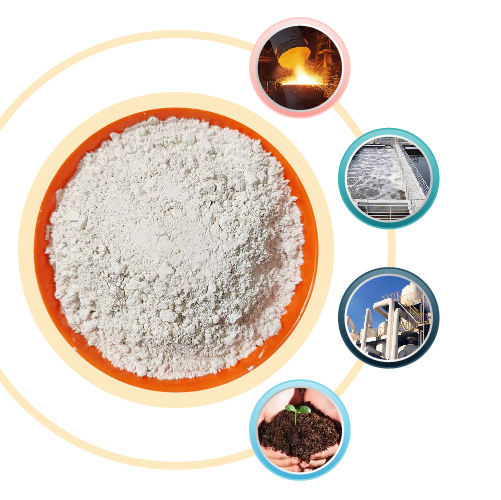
The particle size of water treatment zeolite plays an important role in determining filtration efficiency, hydraulic performance, and ion exchange behavior. Different particle sizes influence how water flows through the filter bed, how suspended solids are retained, and how effectively dissolved contaminants such as ammonium ions are removed.
For industrial water treatment systems, selecting the right zeolite particle size requires balancing filtration accuracy, pressure loss, backwashing requirements, and application conditions. Whether used for wastewater treatment, aquaculture water purification, industrial filtration, or other water treatment processes, properly graded zeolite media can improve system stability and treatment performance.
How Zeolite Particle Size Influences Filtration and Ion Exchange
The particle size distribution of water treatment zeolite affects both physical filtration and chemical adsorption performance. Coarser particles generally provide better permeability and lower flow resistance, while finer particles offer increased surface contact and shorter diffusion paths.
Filtration Performance of Different Zeolite Mesh Sizes
Common zeolite grades such as 12×24 mesh and 16×30 mesh are often selected according to system requirements. Coarser zeolite particles create larger spaces between grains, allowing higher water flow rates and better resistance to clogging. These characteristics make them suitable for applications where hydraulic capacity and longer filtration cycles are important.
Finer zeolite particles provide a more compact filter structure, which can improve the removal of smaller suspended particles and increase contact between water and mineral surfaces. However, smaller particles may also increase pressure loss and require more careful control of backwashing conditions.
The actual filtration performance depends not only on particle size but also on factors such as bed depth, flow velocity, mineral quality, and influent water characteristics.
| Zeolite Size | Characteristics | Typical Applications |
|---|---|---|
| Coarser grades such as 12×24 mesh | Lower resistance, good water permeability, stronger mechanical stability | Industrial filtration, pretreatment systems, high-flow applications |
| Finer grades such as 16×30 mesh | Larger surface contact area, improved particle retention, enhanced exchange efficiency | Ammonium removal, polishing filtration, specialized water treatment |
A properly designed filtration system may combine different particle sizes to achieve both effective particle removal and stable hydraulic operation.
Balancing Pressure Drop, Turbidity Control, and Filter Bed Stability
Particle size selection directly affects the hydraulic performance of a zeolite filter bed. Finer media can improve filtration precision but may increase resistance as water passes through the bed. If the particle size is too small for the system design, excessive pressure loss, faster clogging, and more frequent backwashing may occur.
Coarser zeolite media usually provides better flow capacity and easier maintenance, but extremely large particles may reduce contact efficiency between water and mineral surfaces.
For this reason, professional water treatment design considers several factors together, including:
Filter flow rate
Required contaminant removal level
Raw water quality
Operating pressure
Backwashing conditions
A suitable particle size distribution helps maintain stable filtration performance while reducing unnecessary maintenance requirements.
Key Zeolite Properties That Influence Water Treatment Performance
Surface Area, Porosity, and Mineral Structure
The effectiveness of water treatment zeolite depends not only on particle size but also on its internal pore structure and mineral composition.
Natural clinoptilolite zeolite contains a microporous framework that enables ion exchange with certain dissolved ions, particularly ammonium. Smaller particle sizes can expose more external surface area, which may improve contact efficiency during treatment.
However, excessive grinding can create too many fine particles, reducing permeability and affecting filter bed stability. High-quality zeolite media requires a balance between particle size, structural strength, and available exchange sites.
For industrial applications, mineral composition analysis and particle size testing are important indicators when selecting reliable zeolite filtration media.
Cation Exchange Capacity and Abrasion Resistance
Cation exchange capacity (CEC) is one of the key properties used to evaluate zeolite’s ion exchange potential. Natural clinoptilolite typically shows a CEC range that depends on mineral origin, purity, and processing conditions.
Particle size influences how quickly ion exchange occurs because smaller particles provide shorter pathways for ion movement. However, long-term performance also depends on abrasion resistance. Zeolite used in filtration systems must maintain structural stability during repeated filtration and backwashing cycles.
High-quality zeolite media should provide:
Stable particle size distribution
Good mechanical strength
Low generation of unwanted fines
Consistent chemical performance
These characteristics help maintain reliable operation in long-term water treatment systems.
Selecting Zeolite Particle Size for Different Water Treatment Applications
Industrial Filtration and Cooling Water Treatment
In industrial filtration systems, zeolite particle size is selected according to flow requirements and contaminant characteristics. Coarser grades are often preferred where high throughput and lower pressure loss are important.
For cooling water treatment, properly sized zeolite can support suspended solids removal and ion exchange processes while maintaining stable hydraulic performance.
Wastewater Treatment and Ammonium Removal
For wastewater applications, finer zeolite grades may provide improved contact efficiency because of their increased surface accessibility. Clinoptilolite-based zeolite is widely studied for ammonium removal due to its natural ion exchange properties.
The best particle size depends on wastewater characteristics, treatment targets, and equipment design. In some systems, layered filter beds combining different particle sizes can improve overall performance by combining strong filtration capacity with efficient ion exchange.
The Role of Proper Backwashing in Zeolite Filter Performance
Backwashing is essential for maintaining zeolite filtration efficiency. During operation, suspended solids accumulate within the media bed, gradually increasing resistance.
The backwashing process must be adjusted according to:
Zeolite particle size
Filter vessel design
Media depth
Accumulated solids
Smaller particles require more careful control because excessive backwash flow may cause media loss. Insufficient backwashing, on the other hand, can lead to compaction, channeling, and reduced filtration efficiency.
Proper operation helps extend media service life and maintain stable treatment results.
Choosing Reliable Water Treatment Zeolite for Industrial Applications
Particle size is one of the most important factors when selecting zeolite for water treatment, but it should always be evaluated together with mineral quality, purity, CEC, and application requirements.
Professional zeolite suppliers can provide different particle size grades, including customized mesh sizes, according to filtration equipment and treatment objectives. Detailed product testing, including particle size analysis, chemical composition testing, and quality documentation, helps ensure consistent performance for industrial projects.
For applications such as wastewater treatment, ammonium removal, industrial filtration, and environmental water management, selecting the right zeolite grade can improve operational stability and reduce maintenance challenges.
FAQ
What particle size is commonly used for water treatment zeolite?
Common particle sizes include various mesh grades such as 12×24 and 16×30. The suitable choice depends on filtration goals, flow conditions, and system design.
Does smaller zeolite particle size always provide better filtration?
Not necessarily. Smaller particles can improve surface contact and filtration precision, but they may also increase pressure loss and require more careful backwashing management.
Why is clinoptilolite zeolite used in water treatment?
Clinoptilolite has a porous structure and natural ion exchange capacity, making it useful for applications such as ammonium removal and water purification.
Can different zeolite particle sizes be combined?
Yes. Multi-layer filter designs can combine different particle sizes to balance flow performance, filtration efficiency, and operational stability.
How should water treatment zeolite be selected?
Selection should consider particle size, mineral composition, CEC, mechanical strength, water quality conditions, and the specific treatment system requirements.
Table of Contents
- How Zeolite Particle Size Influences Filtration and Ion Exchange
- Balancing Pressure Drop, Turbidity Control, and Filter Bed Stability
- Key Zeolite Properties That Influence Water Treatment Performance
- Selecting Zeolite Particle Size for Different Water Treatment Applications
- The Role of Proper Backwashing in Zeolite Filter Performance
- Choosing Reliable Water Treatment Zeolite for Industrial Applications
- FAQ