 EN
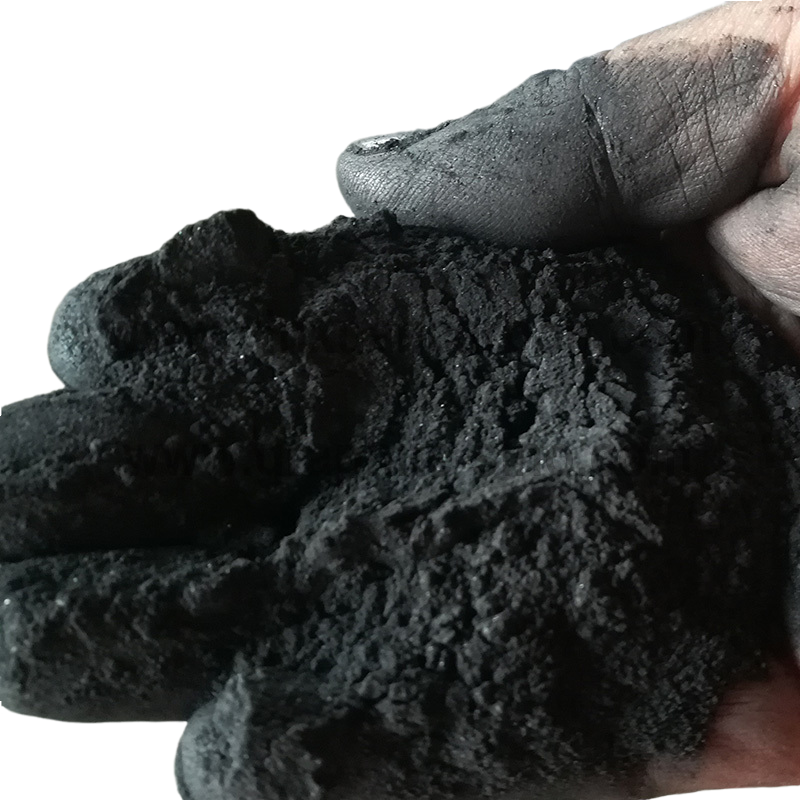
Ultra Fine Graphite Powder Improves Lubricity Through Nanoscale Shear Mechanics
Shear-Induced Exfoliation and Interlayer Sliding in Sub-Micron Graphite
Applying shear stress to ultra fine graphite powder triggers a nanoscale transformation: weak van der Waals forces between graphene layers allow particles to delaminate into thin, flexible sheets. These exfoliated layers slide effortlessly over one another, forming a low-friction interface. Crucially, the process is self-replenishing—continuous sliding exposes fresh basal planes, sustaining a stable lubricating film even under high contact pressures where conventional lubricants break down. The sub-micron particle size ensures a high density of accessible slip planes, amplifying friction reduction. As demonstrated in controlled tribological testing, well-dispersed ultra fine graphite coatings lower friction coefficients from 0.4 to below 0.08 [Wear, 2022].
Why Particle Size (<1 µm) and Basal Plane Alignment Reduce Friction Coefficients
Particles under 1 µm fill microscopic surface asperities completely, forming a continuous, conformal lubricating layer that eliminates direct metal-to-metal contact—the dominant cause of adhesive wear and high friction. Under shear, graphite’s basal planes naturally align parallel to the direction of motion, maximizing lamellar slip efficiency and minimizing energy dissipation. This alignment enables friction coefficients as low as 0.05–0.08, validated in standardized pin-on-disc tests [Tribology International, 2023]. In contrast, coarse graphite (>10 µm) lacks uniform orientation and often behaves as a third-body abrasive, accelerating wear. Only the synergy of sub-micron dimensions and forced basal alignment delivers a stable, ultra-low friction state that endures over thousands of sliding cycles.
Ultra Fine Graphite Powder Extends Coating Lifespan via Wear Resistance Mechanisms
Load-Bearing Graphite Networks Suppress Abrasive Wear in Hybrid Polymer Coatings
Ultra fine graphite powder (≤1 µm) forms a percolating, interlocked network within hybrid polymer matrices—unlike coarse fillers, which generate stress concentration points. Its high aspect ratio platelets distribute mechanical load uniformly, reducing real contact area and suppressing three-body abrasive wear. In epoxy-based coatings, adding just 5 wt% of this powder cut the specific wear rate from 3.8 × 10⁻⁴ mm³/N·m to 1.2 × 10⁻⁴ mm³/N·m [Wear, 2022]. The rigid graphite backbone also restricts polymer chain mobility, increasing composite hardness by 25–30% without compromising flexibility. This dual action—mechanical reinforcement and solid-lubricant functionality—enables the coating to resist micro-cutting and ploughing under repeated high-pressure sliding, effectively acting as a sacrificial, lubricating skeleton that protects the substrate.
Self-Lubrication Under High-Cycle Dry-Sliding Conditions: Real-World Performance Data
Under demanding dry-sliding conditions, ultra fine graphite enables exceptional long-term stability. In ASTM G133 reciprocating ball-on-disc tests, a polyamide-imide coating containing the powder maintained a steady coefficient of friction (COF) of 0.11 after 150,000 cycles—while the unmodified counterpart surged to COF = 0.48 and failed at just 20,000 cycles [Tribology International, 2023]. This durability stems from shear-induced delamination of graphite basal planes, which deposits a thin, adherent tribofilm on the counterface. The film regenerates continuously during operation, preventing metal-to-metal contact and oxidative wear. Field validation from industrial conveyor roller applications confirms these lab results: maintenance intervals increased threefold with graphite-modified coatings, proving robust translation from controlled testing to real-world, high-cycle service.
Optimizing Ultra Fine Graphite Powder Dispersion and Compatibility in Coating Formulations
Agglomeration Challenges and Interfacial Defect Formation in Unmodified Systems
Ultra fine graphite powder (<1 µm) is prone to strong van der Waals-driven agglomeration in liquid coating formulations. These unmodified clusters create persistent interfacial defects—voids, micro-cracks, and resin-depleted zones—in the cured film. Such flaws act as stress concentrators, degrading adhesion by up to 40% and increasing moisture permeability. Worse, trapped graphite aggregates fail to function as discrete solid lubricants, undermining both friction reduction and wear resistance. High-shear mixing alone rarely achieves full deagglomeration; residual clusters produce “dead zones” where the coating reverts to brittle, unreinforced polymer behavior—leading to premature failure under cyclic or environmental loading.
Surface Modification Strategies: Silane Coupling and Amino-Functionalized Treatments
Covalent surface modification resolves dispersion and compatibility challenges. Silane coupling agents—such as 3-aminopropyltriethoxysilane—hydrolyze and condense onto graphite surfaces, introducing organic functional groups that chemically bond with epoxy or polyurethane resins. This creates a molecular bridge, converting the filler from a defect source into an integrated, load-bearing reinforcement. Similarly, amino-functionalized treatments enhance hydrogen bonding with polar matrices, yielding stable dispersions that resist reagglomeration during cure. Modified particles exhibit lower surface energy, enabling tighter packing and uniform network formation. The result is a 20–30% gain in tensile strength and significantly reduced interfacial delamination—critical for achieving the sustained lubricity and wear resistance required in industrial coatings.
FAQ
What is the primary mechanism behind ultra fine graphite powder’s lubricity?
Ultra fine graphite powder achieves lubricity through shear-induced exfoliation of graphene layers, which creates a low-friction interface. This process continuously exposes fresh basal planes, ensuring a self-replenishing lubricating film during sliding motion.
Why is particle size critical in reducing friction coefficients?
Sub-micron particle sizes allow graphite to fill microscopic surface asperities completely, forming conformal layers that prevent direct metal-to-metal contact. Smaller particles also align efficiently under shear, enhancing lamellar slip and reducing energy dissipation.
How does ultra fine graphite powder enhance coating lifespan?
The powder forms interconnected networks that distribute mechanical load, suppressing abrasive wear. Its dual function—solid lubrication and mechanical reinforcement—protects coatings under high-pressure sliding conditions.
What challenges arise during dispersion of ultra fine graphite powder?
The powder naturally agglomerates due to strong van der Waals forces, leading to interfacial defects that compromise adhesion and wear resistance in coatings. Direct dispersion using high-shear mixing often fails to prevent clustering completely.
How does surface modification improve graphite dispersion?
Surface modification techniques, such as silane coupling or amino-functional treatments, create chemical bonds between graphite particles and coating matrices. This ensures stable dispersions, reduces defects, and boosts mechanical and tribological properties of coatings.
Table of Contents
- Ultra Fine Graphite Powder Improves Lubricity Through Nanoscale Shear Mechanics
- Ultra Fine Graphite Powder Extends Coating Lifespan via Wear Resistance Mechanisms
- Optimizing Ultra Fine Graphite Powder Dispersion and Compatibility in Coating Formulations
-
FAQ
- What is the primary mechanism behind ultra fine graphite powder’s lubricity?
- Why is particle size critical in reducing friction coefficients?
- How does ultra fine graphite powder enhance coating lifespan?
- What challenges arise during dispersion of ultra fine graphite powder?
- How does surface modification improve graphite dispersion?