
 EN
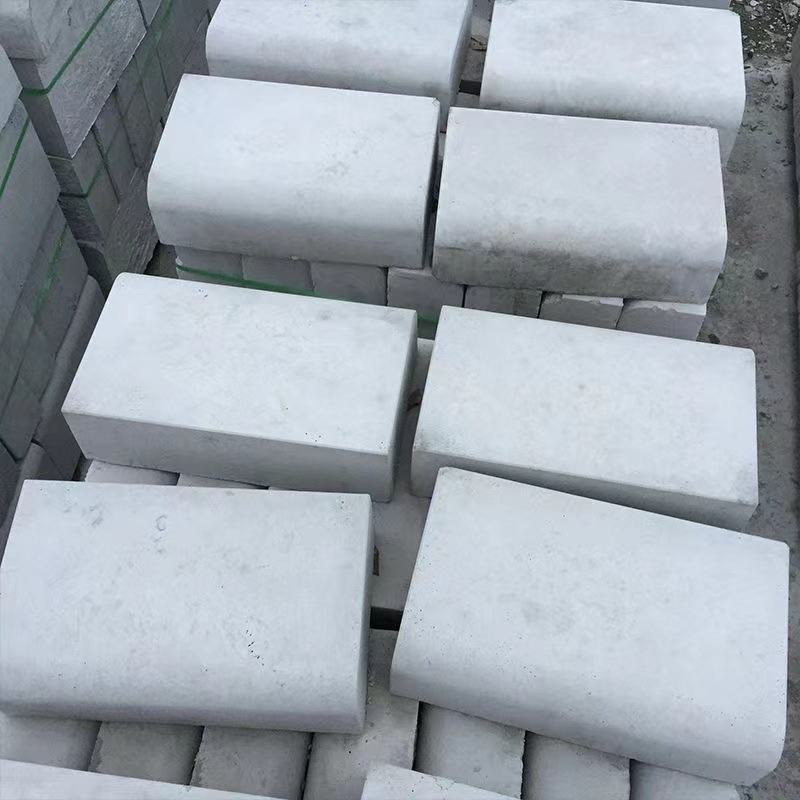
Why Workability Matters in Concrete Building — Beyond Slump Testing
In concrete building, workability defines more than a simple slump measurement. It governs the fresh mix’s ability to flow, fill formwork, and encapsulate reinforcement without segregation or bleeding. While the slump test provides a quick consistency index, it fails to capture the full rheological profile—yield stress, plastic viscosity, and thixotropy—that dictates real-world placement performance. For high-rise pumping, long-distance transport, and densely reinforced sections, reliance on slump alone can be misleading: a mix with an acceptable slump may still segregate under pressure or lose pumpability after pipeline friction. Leading contractors now supplement slump with flow-table or V-funnel tests for self-compacting and high-workability concrete. Beyond initial flow, workability retention is critical—slump loss during transit can lead to costly blockages and cold joints, directly impacting structural integrity. Mineral powders help bridge this gap by modifying particle packing, reducing water demand, and stabilizing the mix, making them essential for achieving consistent, durable concrete building performance that goes far beyond the single-point slump test.
Core Mineral Powders for Concrete Building Workability Optimization
Fly Ash: Class F vs. Class C Effects on Flow Retention and Cohesion in Concrete Building
The selection of fly ash class directly influences the rheological balance between flow retention and mixture cohesion. Class F fly ash—low in calcium and rich in spherical glassy particles—acts as a microfiller that reduces inter-particle friction, extending slump life by up to 30 minutes while improving cohesion without rapid stiffening. In contrast, Class C fly ash contains higher CaO, which can trigger early hydration reactions. Though it may contribute modest early strength, it often accelerates slump loss and narrows the workability window. In practice, Class F is preferred for long-distance pumping or hot-weather placements where flow retention is paramount; Class C may be used only where a quicker set is acceptable—and only when slump loss is actively managed with superplasticizers.
Silica Fume and Limestone Powder: Particle Packing vs. Hydration Nucleation in Concrete Building
Silica fume and limestone powder optimize workability through complementary mechanisms: particle packing and hydration nucleation. Silica fume—a highly reactive ultrafine pozzolan with a specific surface area of 15–30 m²/g—fills microscopic voids between cement grains, increasing packing density and reducing bleeding. Its high surface area, however, raises water demand, typically requiring high-range water reducers to maintain flow. Limestone powder, less chemically reactive but similarly fine, provides nucleation sites that accelerate early silicate hydration—preserving paste fluidity and cohesion while minimizing segregation. A synergistic blend—commonly 5–8% silica fume with 10–15% limestone powder—delivers a dense, stable matrix with excellent pumpability, especially valuable in high-rise concrete building.
GGBS: Balancing Cohesion and Setting Time at Critical Dosage Thresholds
Ground granulated blast-furnace slag (GGBS) enhances cohesion and extends the workable time window—but only within a narrow dosage range. At 30–50% replacement by cement mass, GGBS imparts a smooth, creamy consistency that reduces segregation and improves finishability. Beyond 50%, its latent hydraulic reactivity can delay initial setting by 2–4 hours, particularly in cooler conditions—a retarding effect that aids long-haul transport but risks schedule delays if unmanaged. The optimal threshold lies between 35% and 45% for most concrete building applications, where gains in cohesion and extended workability are balanced against acceptable setting times—provided concrete temperature remains above 10 °C.
Field-Ready Strategies for Integrating Mineral Powders in Concrete Building
Optimal Substitution Ratios and Sequential Blending to Prevent Flash-Set or Viscosity Spikes
Consistent workability demands precise mineral powder dosing and controlled blending sequences. Substituting 20–30% of cement with Class F fly ash enhances flow retention without flash-set risk; keeping silica fume below 8% prevents sudden viscosity spikes. Sequential blending is key: add limestone powder after initial mixing water to maximize its nucleation effect, then introduce fly ash gradually to avoid balling. This order supports stable rheology by enabling finer particles to fill gaps between cement grains, lowering inter-particle friction. Field trials show a 15% fly ash–5% limestone combination extends slump life by 40 minutes [1]. Always pre-test blends with local aggregates—alkali content can alter reactivity—and monitor batch consistency using a Marsh funnel to detect early segregation signs.
Real-World Validation: Tanjong Pagar Tower Case Study — 22% Fly Ash + 8% Limestone Improved Pumpability by 19%
The Tanjong Pagar Tower project in Singapore demonstrated how dual-mineral strategies translate into field performance. Using 22% fly ash and 8% limestone powder as partial cement replacements—and maintaining a 0.32 water-binder ratio—the team achieved a 19% improvement in pumpability, measured as reduced pressure per vertical meter [2]. Blockage events dropped by 30%, placement time fell by 12%, and 28-day compressive strength met specification at 55 MPa. Critically, the sequential blending protocol preserved early-age performance while enhancing cohesion and flow. This approach has since been replicated across three additional regional high-rise projects—validating its scalability for improved construction velocity and surface finish quality.
FAQ
Why does the slump test alone not suffice in evaluating workability?
The slump test provides only a consistency index and does not account for rheological properties like yield stress, viscosity, and thixotropy, which are critical for real-world performance, especially in complex placements.
What are the benefits of using Class F fly ash in concrete building?
Class F fly ash enhances flow retention by reducing inter-particle friction, extends slump life, and improves cohesion without rapid stiffening, making it ideal for long-distance pumping or hot-weather applications.
How do silica fume and limestone powder complement each other?
Silica fume increases packing density and reduces bleeding but raises water demand, while limestone powder accelerates hydration and preserves fluidity. Their combination creates a dense matrix with improved pumpability.
What is the ideal dosage for GGBS?
The optimal dosage range for GGBS is between 35% and 45% of cement mass, balancing extended workability and acceptable setting times, especially when concrete temperature is above 10 °C.
How can mineral powders prevent flash-set or viscosity spikes?
Using controlled blending sequences and appropriate substitution ratios (e.g., adding limestone powder after initial water mixing and fly ash gradually) helps maintain stable rheology and prevent sudden viscosity changes.
[1] ASTM C1877-23, Standard Practice for Use of Limestone Powder in Concrete.
[2] Singapore Building and Construction Authority (BCA), High-Rise Concrete Placement Best Practices Report, 2023.