 EN
EN
Why Hematite Iron Oxide Is the Benchmark Pigment for High-Performance Coatings
Superior color strength (C* >39), hiding power, and UV stability in architectural and industrial systems
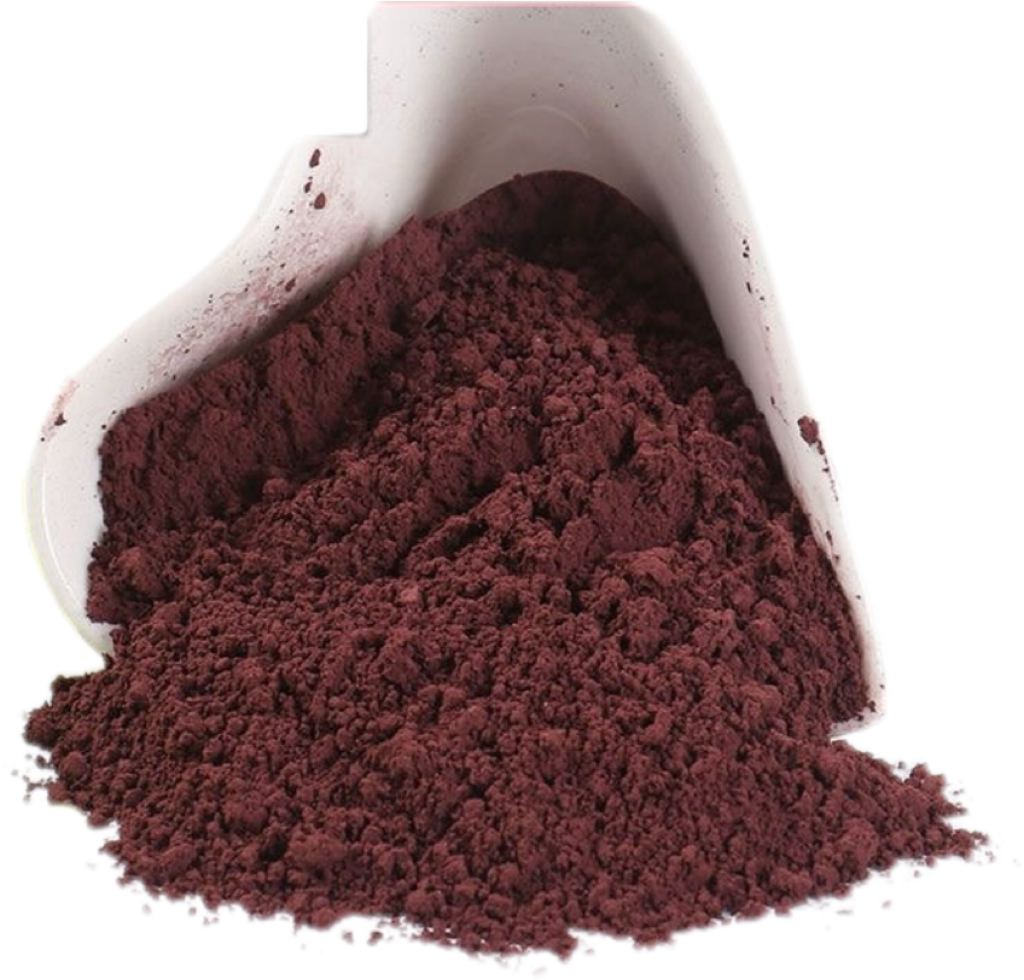
Hematite iron oxide pigments deliver exceptional color saturation, with top-tier products achieving C* values above 39—signifying rich, vibrant reds that retain intensity after years of exposure. In architectural coatings, this high chroma reduces tinting pigment demand by up to 12% compared to lower-chroma alternatives, lowering formulation costs and simplifying color matching (Coatings World, 2023). Its hiding power is equally compelling: a 20 µm dry film thickness achieves over 98% opacity, minimizing the number of coats required for full coverage. For industrial applications—especially automotive and marine finishes—UV stability is non-negotiable. Hematite’s inherent chemical inertness resists photo-degradation, and accelerated QUV testing per ASTM G154 (2022) confirms ΔE <1.5 after 3,000 hours, ensuring long-term color fidelity. This triad of strength, coverage, and durability solidifies hematite as the benchmark pigment for demanding coating systems.
Phase purity (α‑Fe₂O₃) and ΔE <0.5 tolerance: Ensuring batch‑to‑batch consistency and regulatory compliance
Performance begins with phase purity: only the α‑Fe₂O₃ crystalline structure delivers optimal color, chemical resistance, and thermal stability. Leading suppliers achieve >99% α-phase purity through precision synthesis, eliminating interfering phases like maghemite (γ‑Fe₂O₃) that cause hue shifts and reduced durability. This purity underpins tight color consistency—measured as ΔE <0.5 under D65 illumination—so successive pigment lots are visually indistinguishable. For large-scale coating operations, this translates to a 30% reduction in tinting adjustments and lab rework per production batch (Quality Coatings, 2022), supporting just-in-time manufacturing and reducing downtime. Crucially, α‑Fe₂O₃’s low solubility and absence of regulated heavy metals—including nickel, chromium, and copper below 10 ppm—ensure seamless compliance with EU REACH, FDA indirect food contact requirements, and EN 71‑3. This eliminates the need for post-production heavy metal screening, accelerating supply chain qualification.
Critical Quality Specifications Driving Bulk Hematite Iron Oxide Procurement Decisions
Particle size distribution and dispersion stability — impact on mill base viscosity and film uniformity
Particle size distribution (PSD) is the primary determinant of hematite’s dispersion behavior and final film quality. Premium grades feature a narrow PSD, typically with a D50 between 0.2–1.0 µm and a D90/D10 ratio consistently below 5.0. This tight distribution enables predictable, low mill base viscosity—allowing higher pigment loading without compromising flow or application performance on high-speed lines. In contrast, broad PSDs introduce oversized agglomerates that resist wetting (causing seeding and grit) and ultra-fines that induce unstable thixotropy (collapsing under shear). Both defects impair film uniformity, resulting in gloss variation, inconsistent hiding, and compromised mechanical integrity. A tightly controlled PSD ensures robust dispersion stability, delivering smooth, optically dense films with reliable performance across substrates and application methods.
Water-soluble content (<0.5%) and transition metal impurities (<50 ppm Ni/Cr/Cu) as supply-chain reliability indicators
Water-soluble salts and transition metal impurities serve as critical proxies for manufacturing discipline—and long-term coating failure risk. Residual sulfates or chlorides exceeding 0.5% water-soluble content indicate incomplete post-synthesis washing. These hygroscopic salts generate osmotic pressure at the coating-substrate interface, triggering blistering and delamination in humid service environments. Similarly, trace levels of nickel, chromium, and copper—even below 50 ppm each—act as potent catalysts for polymer binder photodegradation, accelerating chalking and color fade. Strict adherence to these thresholds reflects rigorous process control, from raw material sourcing to final drying and packaging. Consistently meeting them signals a supplier’s ability to deliver defect-free, durable raw materials—not just chemical conformity—making these specifications essential gatekeepers for industrial procurement.
Scalable Production Technologies Enabling Reliable Bulk Hematite Iron Oxide Supply
Precipitation synthesis vs. spray pyrolysis: Trade-offs in throughput, morphology control, and scalability to 600,000+ tonnes/year
Reliable bulk supply hinges on production technologies that balance scale, consistency, and performance. Precipitation synthesis—the dominant global method—uses controlled aqueous reactions to build α‑Fe₂O₃ particles with tunable size and shape. It accounts for over 80% of worldwide output and supports single-site capacities exceeding 600,000 tonnes annually (Pigment Market Analysis, 2023). While highly scalable and cost-efficient, it demands precise control of pH, temperature, and ageing to maintain batch-to-batch uniformity. Spray pyrolysis, by contrast, produces near-monodisperse spherical particles via rapid thermal decomposition of atomized precursors—offering superior morphology control but limited throughput due to energy intensity and capital constraints, typically capping at ~50,000 tonnes/year. The table below compares key attributes:
| Parameter | Precipitation Synthesis | Spray Pyrolysis |
|---|---|---|
| Throughput | High (≥600,000 tonnes/year) | Moderate (≤50,000 tonnes/year) |
| Morphology Control | Good, tunable with synthesis conditions | Excellent, near‑monodisperse spheres |
| Scalability | Proven industrial scale | Limited by energy and capital costs |
| Typical Application | Architectural coatings, general colorants | High‑performance automotive, specialty pigments |
Thus, precipitation synthesis forms the backbone of global bulk supply, while spray pyrolysis remains reserved for niche applications where morphological precision justifies its premium cost.
Global Logistics and Certification Standards for Industrial-Scale Hematite Iron Oxide Delivery
Maintaining hematite’s performance integrity from factory to formulation line requires integrated logistics and certification rigor. International standards govern every touchpoint: ISO 668 defines container dimensions and ISO 1161 specifies corner fittings for secure maritime stacking; ASTM D4169 provides distribution simulation protocols to validate packaging resilience under real-world handling stresses; and ISTA protocols further minimize in-transit damage—reducing claims and production delays. Critically, packaging must incorporate moisture-proof barriers and desiccants, as hematite’s fine particle nature makes it susceptible to humidity-induced agglomeration and contamination. When these standards are systematically applied—not as checkboxes but as engineered safeguards—suppliers ensure that bulk shipments arrive with unchanged PSD, phase purity, and color consistency, preserving the pigment’s high-performance promise from production to paint can.
FAQ
What makes hematite iron oxide pigments ideal for high-performance coatings?
Hematite pigments excel due to their superior color strength, hiding power, and UV stability, making them highly durable and cost-efficient in various applications.
Why is phase purity important in hematite iron oxide pigments?
Phase purity ensures optimal color, chemical resistance, and thermal stability. High α‑Fe₂O₃ purity guarantees batch-to-batch consistency and compliance with regulatory standards.
How does particle size distribution impact coating performance?
A narrow PSD improves dispersion stability, reduces mill base viscosity, and ensures smooth films with consistent hiding and gloss properties.
What production technologies are used for hematite iron oxide pigments?
Precipitation synthesis is the dominant method, offering scalability and cost efficiency, while spray pyrolysis is used for niche applications requiring precise morphology control.
What are the global logistics standards for hematite iron oxide delivery?
Standards such as ISO 668 and ASTM D4169 ensure optimal packaging and minimize in-transit damage, preserving pigment quality during shipment.
Table of Contents
- Why Hematite Iron Oxide Is the Benchmark Pigment for High-Performance Coatings
- Critical Quality Specifications Driving Bulk Hematite Iron Oxide Procurement Decisions
- Scalable Production Technologies Enabling Reliable Bulk Hematite Iron Oxide Supply
- Global Logistics and Certification Standards for Industrial-Scale Hematite Iron Oxide Delivery
-
FAQ
- What makes hematite iron oxide pigments ideal for high-performance coatings?
- Why is phase purity important in hematite iron oxide pigments?
- How does particle size distribution impact coating performance?
- What production technologies are used for hematite iron oxide pigments?
- What are the global logistics standards for hematite iron oxide delivery?