
 EN
EN
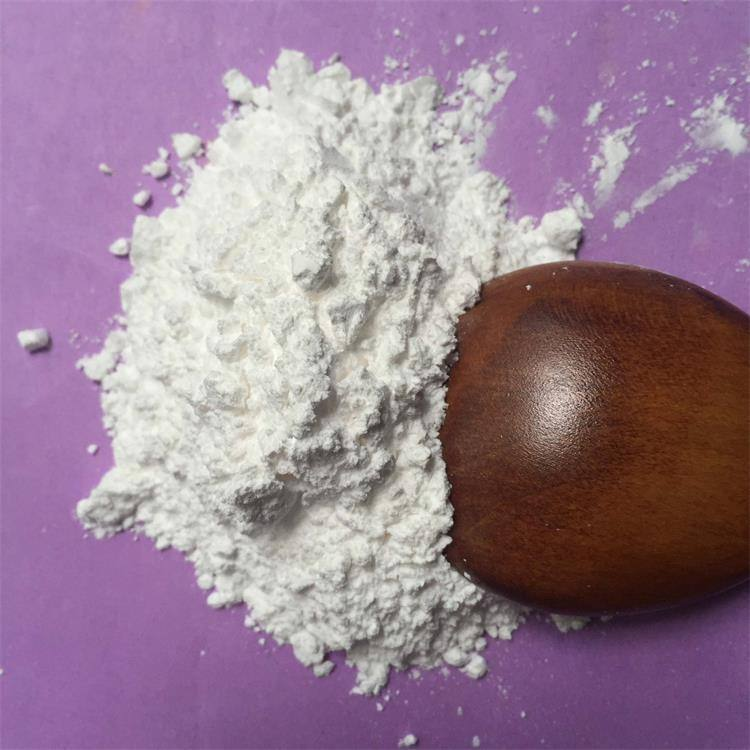
Mechanism: How Calcium Carbonate Powder Improves PVC Hardness
The addition of calcium carbonate powder to PVC compounds enhances hardness through a two‑fold mechanism: a rigid filler network that immobilizes polymer chains, and optimized particle‑matrix interactions that maximize stress transfer. Both effects combine to raise the material’s resistance to indentation and deformation.
Restricted Polymer Chain Mobility via Rigid Filler Network
When calcium carbonate particles are dispersed in PVC, they act as rigid inclusions that physically obstruct the movement of surrounding polymer chains. At sufficient loading—typically above the percolation threshold—the particles form a continuous, load‑bearing skeleton. This network restricts local segmental motion, preventing PVC chains from sliding past one another under external force. As a result, the composite exhibits higher stiffness, modulus, and resistance to indentation. The filler also blunts stress concentrations by distributing applied loads over a larger area, reducing the tendency to yield. Even modest, well-dispersed additions can significantly increase hardness without compromising dimensional stability.
Critical Role of Particle Size Distribution and Surface Adhesion
Hardness gains depend not only on filler loading but also on particle size distribution and interfacial adhesion. Finer particles—especially those with a narrow distribution around 1 µm or less—offer greater specific surface area, enabling more efficient stress transfer from the polymer matrix to the rigid filler. Surface treatment (e.g., stearic acid coating) improves compatibility with PVC, prevents agglomeration, and ensures uniform dispersion. Strong interfacial adhesion minimizes debonding under load, preserving the integrity of the filler network and its ability to constrain chain mobility. In contrast, oversized or poorly adhered particles generate stress concentrations and micro-voids, undermining hardness. Properly engineered calcium carbonate powders—optimized for size and surface chemistry—deliver maximum hardness enhancement while maintaining processability and toughness.
Economics: Calcium Carbonate Powder as a Cost-Effective PVC Filler
Resin Substitution Strategy: 15–30% Calcium Carbonate Powder Reduces Raw Material Costs
Replacing 15–30% of the PVC resin with calcium carbonate powder is a proven strategy to reduce raw material costs without sacrificing rigidity. Ground calcium carbonate typically costs less than one-tenth that of suspension-grade PVC resin, making substitution highly economical. Extrusion operations for pipes and profiles show that a 25% filler loading reduces resin costs by approximately 18–22% (Plastics Economics, 2023). Its high density and low oil absorption help maintain consistent melt rheology, minimizing the need for costly processing aids. Stearic-acid-coated grades ensure effective dispersion, avoiding microvoids that would weaken the composite. A particle size range of 2–10 µm is commonly targeted for optimal packing and load-bearing capacity. By substituting a quarter of the polymer, compounders achieve lower material cost per meter of extruded product while delivering rigid, standards-compliant output—especially valuable in high-volume construction applications like pipes and window profiles.
Energy Savings from Ultrafine Precipitated Calcium Carbonate (PCC) in Extrusion
Ultrafine precipitated calcium carbonate (PCC), with primary particles below 0.1 µm, reduces energy consumption during PVC extrusion by improving heat transfer and lowering melt viscosity. Its high surface area and tailored morphology act as a nucleating agent, accelerating crystallization and enabling faster cooling—reducing required melt temperature by 5–10 °C (Polymers Processing, 2024). This translates to a 12–15% drop in motor load on twin-screw compounding lines using 20% PCC versus unfilled resin. The filled compound’s thermal conductivity (0.35–0.40 W/m·K) nearly doubles that of pure PVC (0.16 W/m·K), facilitating quicker die cooling and permitting up to 12% higher line speeds while maintaining dimensional stability. These improvements cut electricity use per kilogram of finished product—and when combined with raw material savings, deliver a total cost reduction of 25–30% for rigid PVC formulations.
Optimization: Balancing Hardness Gains and Impact Toughness with Calcium Carbonate Powder
The Particle Size Paradox: Why Submicron Calcium Carbonate Powder Can Increase Brittleness
While submicron calcium carbonate powder enhances hardness by forming a denser rigid network, it can paradoxically reduce impact toughness. Particles below 1 µm have high surface energy and tend to agglomerate, creating microscopic stress concentrators. Under impact, these clusters initiate cracks rather than absorb energy—leading to brittle failure. A 2021 study in Polymer Testing found that PVC compounds with 0.7 µm calcium carbonate exhibited 28% lower notched Izod impact strength than those with 3 µm particles, despite a 12% hardness gain. This occurs because excessive chain immobilization limits ductile deformation and energy dissipation. To mitigate brittleness, formulators use surface-treated grades or bimodal distributions—combining fine particles for hardness with coarser ones to preserve inter-particle spacing and matrix ductility.
FAQ Section
What is the main purpose of adding calcium carbonate powder to PVC?
Calcium carbonate powder improves the hardness of PVC by forming a rigid filler network that immobilizes polymer chains and enhances particle-matrix interactions for better stress transfer.
How does particle size affect the performance of calcium carbonate in PVC?
Finer particles increase hardness due to higher specific surface area and better dispersion. However, excessively small sizes can reduce impact toughness by forming stress concentrators.
Can calcium carbonate powder reduce PVC production costs?
Yes, substituting 15–30% of PVC resin with calcium carbonate powder can significantly lower raw material costs, reduce energy usage, and improve extrusion output efficiency.